Why Some Kids Learn Music Faster Than Others
Quick answer
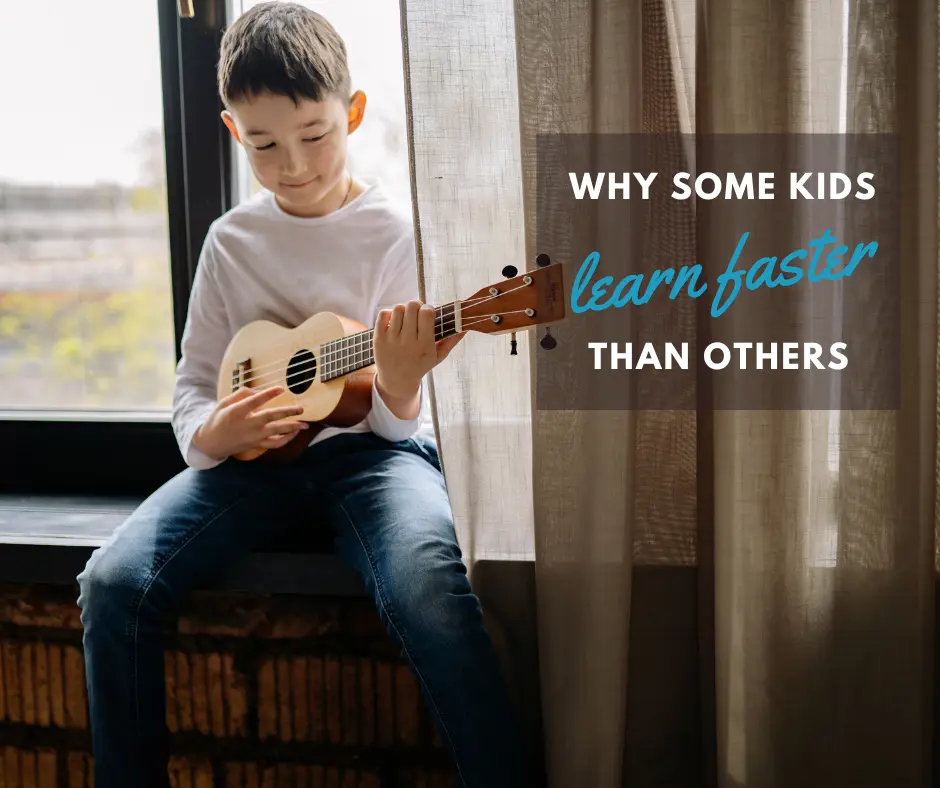
Why do some kids learn music faster than others?
Children learn music at different speeds for many reasons, including personality, age, learning style, confidence, attention span, repetition, and previous exposure to music. Faster progress does not necessarily mean a child is more talented. In many cases, children simply learn in different ways and develop musical skills on different timelines.
Introduction
One of the most common concerns parents quietly carry during music lessons is this:
Why does another child seem to be progressing faster than mine?
Maybe another student is already playing full songs while your child is still learning simple rhythms. Maybe a sibling seemed to pick things up more quickly. Or perhaps your child loves music but still struggles with focus, confidence, or coordination during lessons. These thoughts are incredibly normal for parents to have. But the truth is that music learning is not a race, and children develop musical skills at very different speeds for a wide variety of completely normal reasons.
Some children naturally jump into new experiences quickly. Others need more repetition and time to feel comfortable before their confidence begins to grow. Some children are highly focused from the beginning, while others learn best through movement, play, and gradual exploration. And importantly, slower progress does not mean a child is less musical or less capable of learning. In fact, one of the most valuable things parents can understand is that music education is about much more than how quickly a child can play a song. Music helps children develop confidence, listening skills, coordination, creativity, patience, emotional expression, and perseverance over time.
In this article, we’ll explore why children learn music differently, what healthy musical progress actually looks like, and how parents can support their child’s unique learning process without unnecessary pressure or comparison.
Children Learn Music in Different Ways
One of the biggest misconceptions about music education is the idea that all children should progress at roughly the same pace.
In reality, children absorb information very differently from one another.
Some children are naturally:
• highly verbal
• very coordinated
• strong pattern recognizers
• comfortable performing in front of others
Other children may:
• need more repetition
• learn best through movement
• take longer to feel confident
• warm up slowly in new situations
For example, one child may quickly memorize a melody after hearing it once, while another child may need repeated exposure before the pattern begins to feel familiar. Both children are still learning. Young children are also developing physically, emotionally, socially, and cognitively all at the same time. Music learning is connected to all of these areas. That means differences in progress are not only normal, they are expected.
Confidence Plays a Bigger Role Than Parents Realize
Confidence has a huge impact on how children approach music lessons. Some children are naturally comfortable trying new things, even if they make mistakes. Others are more cautious and may need extra reassurance before they fully participate.
For example:
A confident child may enthusiastically experiment on the piano even when they are unsure of the notes. Another child may hesitate, worried about “getting it wrong,” even though they are fully capable of learning the same material. This is one reason parents should be careful about comparison. Children often sense pressure much more deeply than adults realize. If music starts feeling like a performance test instead of a learning experience, some children may become anxious, discouraged, or resistant. When children feel safe to experiment, free to make mistakes, encouraged for small improvements they are usually much more willing to keep trying. And over time, that willingness to continue is often far more important than early speed.
Progress in Music Often Looks Smaller Than Parents Expect
Another reason parents sometimes worry is that beginner music progress can appear deceptively simple at first.
In the early stages, growth may look like:
• remembering a rhythm from the previous lesson
• keeping a steady beat
• recognizing high and low sounds
• repeating a short musical pattern
• staying focused for a longer period of time
These may not seem like dramatic accomplishments to adults, but they are incredibly important foundational skills. For example, a child practicing a short rhythm repeatedly is developing timing, coordination, listening skills, and memory all at once. Those simple early exercises are laying the groundwork for much more advanced musical abilities later on. Music learning is deeply cumulative. Small skills gradually build on one another over time. That’s why consistency matters much more than speed.
Attention and Motivation Naturally Fluctuate
It is also important for parents to remember that young children are still learning how to regulate attention, emotions, and persistence.
Because of this, motivation naturally ebbs and flows.
Some days your child may seem:
• highly engaged
• excited to practice
• eager to show you what they learned
Other days they may:
• lose focus quickly
• become frustrated easily
• need more encouragement
This is completely normal. Music learning is rarely perfectly linear, especially for beginners. Children often learn best when they feel supported, emotionally safe, and free to progress at their own pace. This is one reason short, low-pressure practice sessions are often much more effective than long, stressful ones. For many children, even 10 to 15 minutes of positive interaction with music a few times each week can create meaningful growth over time.
Why Repetition Is So Important for Kids
Adults sometimes worry that children are “stuck” because they repeat the same musical activities over and over. But repetition is actually one of the most important parts of how children learn. Repeating rhythms, movements, songs, patterns helps strengthen memory, coordination, listening skills, and confidence.
For example, a child repeating a short piano pattern multiple times is not just memorizing notes. They are also learning finger coordination, timing, focus, pattern recognition, and musical familiarity. Children often need many successful repetitions before a skill begins to feel automatic and comfortable. This is completely developmentally appropriate.
How Parents Can Support Their Child’s Progress
Parents play a powerful role in shaping how children experience music learning.
A few simple approaches can make a tremendous difference:
Keep expectations realistic
Music learning is gradual. Focus on effort, consistency, and confidence rather than comparing your child to others.
Celebrate small victories
Even small moments of progress matter! A child remembering a rhythm or participating more confidently is meaningful growth.
Avoid comparison
Every child develops differently. Faster progress does not equal greater talent or long-term success.
Keep music enjoyable
Children are much more likely to continue learning when music feels positive, encouraging, and approachable.
How Online Music Lessons Can Support Different Learning Styles
One of the benefits of online music learning is flexibility.
Programs designed for young beginners like My Music Workshop allow children to:
• repeat lessons as needed
• learn at their own pace
• revisit concepts comfortably
• build confidence gradually
Because lessons are designed to be engaging and beginner-friendly, children can experience music learning in a lower-pressure environment that supports different personalities and learning styles.
Frequently Asked Questions
Is my child behind if they learn music slowly?
No. Children develop musical skills at different rates, and slower progress does not mean a child lacks ability or talent.
Why does my child struggle with practice?
Young children are still developing focus, persistence, and emotional regulation. Short, encouraging practice sessions are often most effective.
Do some children naturally learn music faster?
Yes, but faster early progress does not always predict long-term musical success.
How can parents help children feel confident in music lessons?
Encouragement, patience, realistic expectations, and avoiding comparison can all help children feel more confident and motivated.
Conclusion
Children learn music at different speeds for many completely normal reasons. Personality, confidence, repetition, attention span, and learning style all play a role in how musical skills develop over time. The most important thing parents can do is create an environment where music feels encouraging, enjoyable, and free from unnecessary pressure or comparison. Because ultimately, successful music education is not just about how quickly a child learns. It is about helping children build confidence, creativity, perseverance, and a lifelong connection to music.
Ready to Get Started?
If your child is ready to begin learning music, My Music Workshop offers beginner-friendly lessons designed specifically for young learners.
Families can explore engaging lessons in:
• piano
• drums
• ukulele
• singing
You can try the program free for 7 days and discover a fun, supportive way to introduce music into your child’s life.
About the Author
Carole Crocco is a music educator with My Music Workshop who has extensive experience teaching young children and helping families introduce music in fun and developmentally appropriate ways. She is also a classically trained soprano and a singer-songwriter.
Ready to start lessons at home?
Step-by-step video lessons for kids 4 to 12 with Mr. Elias, with play-alongs and picture quizzes. Each lesson takes about 10 to 15 minutes. From $10 a month.