How Can I Help My Child Practice If I Don’t Play an Instrument?
Quick answer
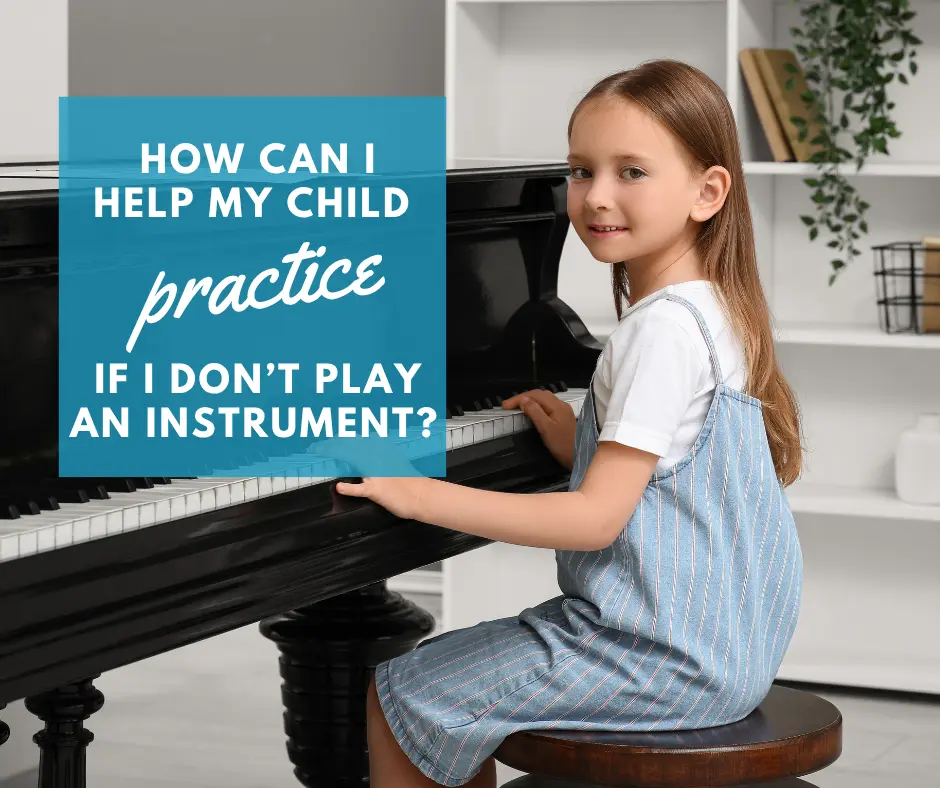
You do not need to play an instrument to help your child succeed in music lessons. Your role is not to become their teacher, but to be a supportive presence who helps them build consistent habits, stay encouraged, and recognize their progress. Establish a manageable practice routine, show interest in what they are learning, and celebrate their effort rather than focusing only on getting every note right. Ask your child to show you what they are working on, and work together with them to problem solve if you feel like you don’t know how to help. Just as you would support your child learning a sport or another new skill, being present, patient, and encouraging can make a meaningful difference in their musical journey.
Do I Need to Know Music to Help My Child Practice?
It can be challenging to help your child learn something you do not feel familiar with. If you are asking this question, give yourself some kudos. Just as it is a vulnerable and brave pursuit for your child to learn an instrument, it is admirable to be a parent who is willing to acknowledge what they do not know.
Think about all the other skills your child might learn throughout childhood. You do not have to be a professional soccer player to cheer from the sidelines, or an artist to encourage your child to draw. Your presence, interest, and support matter even when you cannot personally demonstrate the skill they are learning. You can help establish a routine, encourage your child when something feels hard, and show genuine interest in their progress.
Your role at home is to create an environment where learning can happen consistently.
How Can I Help My Child Practice Without Teaching Them?
Learning an instrument takes time, repetition, and patience. Your child will not always feel motivated to practice, and some days will feel more productive and easier than others. That is normal. For a young beginner, that might mean sitting next to them at the piano for five focused minutes, reminding them to grab their ukulele before practice, or listening attentively while they play through a song they have been learning. Try asking, “What did your teacher want you to work on this week?” If your child is old enough, let them explain the assignment in their own words. You can help them remember what they are supposed to practice without needing to know how to do it yourself.
How Do I Make Practice Part of Our Routine?
One of the most helpful things you can do is make practice a predictable part of your child’s day. For young beginners, consistency is generally more useful than occasional marathon practice sessions. Even a few focused minutes can help a child build the habit of returning to their instrument and becoming more comfortable with what they are learning.
Choose a time that works for your family. Perhaps your child practices after a snack, before dinner, or following a little downtime after school. The best time is one you can reasonably maintain without creating unnecessary stress.
It can also help to connect practice to something that already happens every day. Just as brushing teeth becomes part of the daily routine, music practice can become a familiar expectation rather than a decision your child has to make from scratch every afternoon. Routines take time to establish. Your child may need reminders, encouragement, and your help getting started, especially when they are young. Try placing a brightly colored post-it note on their mirror reminding them to practice for 5-10 minutes with a note of encouragement or creating a practice chart with stickers that reflect their interests. These little personalized touches can help your kiddo feel more supported and feel that you are in it with them.
Should I Sit With My Child While They Practice?
It really depends on your child’s age, desire for independence, and personality. Younger children almost always benefit from having a parent nearby to help them get started and stay engaged. Older children may prefer more space to practice by themselves, with a parent checking in later.
If your child is just beginning lessons, try sitting nearby and showing interest without taking over. You can read a book or respond to emails while they play. This has been called the “house plant” method. You’re there but in a quiet and unobtrusive way. It can also be really helpful for your child to practice in an area where you can be present to listen but not necessarily right over their shoulder. Some pianists have shared that having the family piano near the kitchen or dining area enabled them to share what they were learning with their parents while their parents were cooking or cleaning. Something to consider as you think through exactly where your child actually practices music in your home. You might ask, “Could I please listen to the song that you are learning,” or “What are you working on today?”
You can also ask them to teach you something. Even if you do not play an instrument, inviting your child to demonstrate what they know can help them feel capable and proud of their progress. It can also be really fun for kids to feel like they know something that their parents do not! Treat this as an opportunity to be humble and show your child that it is okay not to know everything.
As your child matures, they may not need as much practice supervision and this is a great thing! It means that they are getting more confident in their ability to self-direct their own learning.
What Should I Do When My Child Gets Frustrated?
Learning an instrument can be rewarding, but it can also be hard. A passage that seemed easy during a lesson may suddenly feel difficult at home. It’s okay if you do not know how to fix the musical problem in the moment.
Start by acknowledging how they feel. You might say, “That part seems tricky right now,” or “I can see you’re working hard on that.” Just like us, sometimes children need a moment to reset before they are ready to try again. Encourage them to work on a manageable section rather than expecting them to play an entire song perfectly. Try to avoid making every practice session into a series of corrections. If your child feels that practice is simply an opportunity for someone to point out what they are doing wrong, they may begin to dread it. Instead, it is so important for parents to normalize that mistakes are a really important part of the learning process. Progress often comes from working through small challenges over time. Here’s a helpful mantra you can share with your child: progress over perfection.
How Can I Encourage My Child Without Becoming the Practice Police?
Start by setting clear, realistic expectations together. For example, ask your child “how many minutes each day do you think you need to practice to get better at this instrument?”. If your child comes up with a number on their own, roll with that! The more that they can take ownership of their learning journey, the better. Also, keep your child’s temperament and age in mind. You can help them come up with a practice strategy that makes sense for who they are as a person. Are they a morning person? Encourage a few minutes of practice after breakfast each day. Are they extroverted? Maybe you can encourage some FaceTime mini performances for grandparents or aunts and uncles. You can avoid adversarial interactions around practice by tailoring your child’s practice time to their unique personality.
Also, be sure to make room for joy. Allow your child to explore music that interests them and try to enter into that with them by listening to songs that they like and asking them why they like that particular song. Making music requires work, but it is also so fun! Helping your child stay connected to what feels fun about music can help them when practice doesn’t feel particularly exciting.
If practice repeatedly becomes a battle, step back and look at the bigger picture. Is the routine realistic? Is your child struggling with the difficulty level of the material? Being your child’s cheerleader doesn’t mean that there are no expectations connected to their music learning. It’s a balance between keeping things light and also encouraging them to reach their potential.
You Don’t Have to Be a Musician to Make a Difference
Learning an instrument is a journey that requires time, patience, and perseverance. You do not need to know how to play to help your child experience the rewards of learning an instrument. Your presence and support can help them build habits, navigate frustration, and discover what they are capable of accomplishing.
At My Music Workshop, we understand that parents are learning alongside their children, and you do not have to have a musical background to get started. In fact, since our instruction videos are pre-recorded, you can re-visit the content and know exactly what your child is learning on their instrument! We offer online music lessons in piano, ukulele, drum, and singing designed to help children develop their musical skills Whether your child is just beginning or ready to grow their skills, My Music Workshop can help your family take the next step. You can even try a free seven day trial from home to see whether our approach is a good fit. You bring the encouragement; we’ll help guide the musical learning.
About the Author
Carole Crocco is a music educator with My Music Workshop with extensive experience teaching young children and helping families introduce music in fun and developmentally appropriate ways. She is also a classically trained soprano and singer-songwriter.
Ready to start lessons at home?
Step-by-step video lessons for kids 4 to 12 with Mr. Elias, with play-alongs and picture quizzes. Each lesson takes about 10 to 15 minutes. From $10 a month.