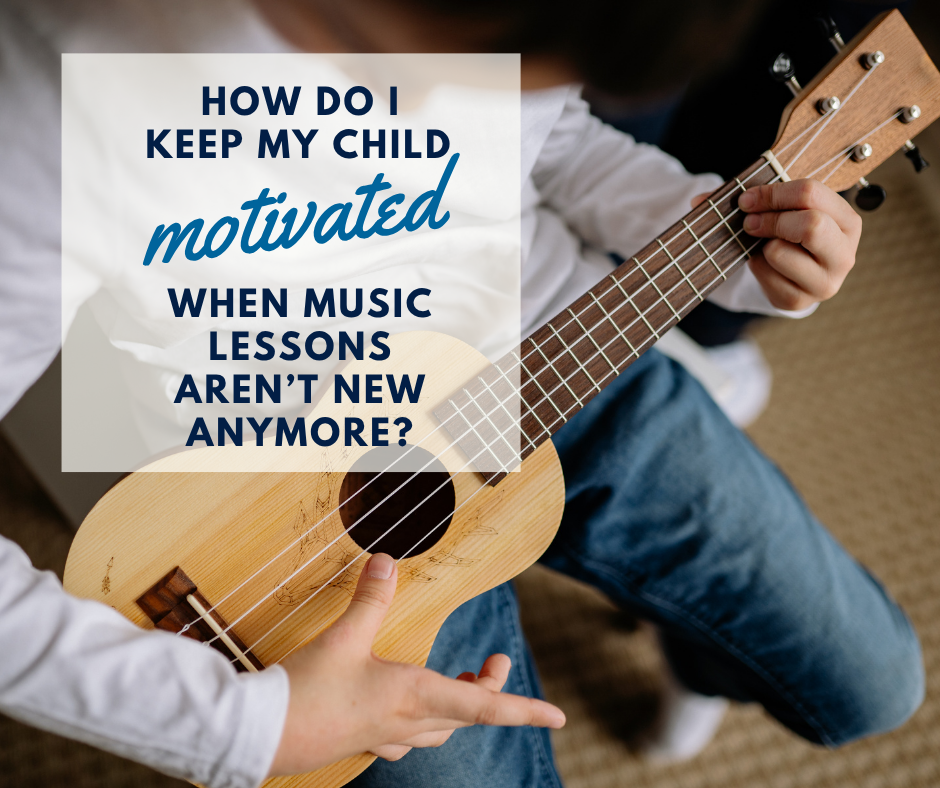
How Do I Keep My Child Motivated When Music Lessons Aren’t New Anymore?
Quick answer
When music lessons stop feeling new and exciting, the answer is not necessarily to find a way to make every practice session jam packed with fun. It is essential for music to become part of your child’s routine and a family priority. That does not mean your child has to practice for hours every day. Even a few focused minutes of consistent practice can help a child experience progress and build the habit of showing up to practice their instrument.
Parents can also help by choosing music their child enjoys, celebrating even the smallest bits of progress and normalizing for their kids that frustration is a normal part of learning. It is an unrealistic expectation to keep a child constantly excited about music. Focus on helping them learn that meaningful skills are built through consistency, small moments of perseverance, and a willingness to keep going even when something is not particularly exciting.
Why Does My Child Lose Motivation After the Novelty Wears Off?
The novelty is actually supposed to wear off for a kid when they are learning an instrument. This is totally normal. For example, when your child first begins piano or ukulele lessons, everything is new. They have the chance to touch a new instrument, learn new things, and discover that they can make music themselves. It is exciting! But eventually, the newness fades and something that seemed easy at first suddenly feels more challenging. Instead of worrying about this, it should actually be a moment of celebration because this is where the real learning begins. This is the most important stage of a child’s musical learning journey because this is where they begin to understand how to push forward and experience the satisfaction of getting good at an instrument.
Does Practicing Really Need to Be a Family Priority?
Yes, but making music a priority does not have to mean becoming the practice police and demanding hours of practice every day. I find it helpful to think of music practice the same way that you think about brushing your teeth. Most kids are not excited to brush their teeth twice a day but it needs to happen because you have decided as the parent that it is important enough to do regularly. Practicing an instrument is the exact same. Even if you set a timer for five minutes, think of it as their music hygiene getting done for the day. Keep the bar low. Maybe your child just listens to the song that they are learning that day. Maybe they pick one chord to strum ten times in a row. Just focus on them doing something and very often, that little step will evolve into more time spent with their instrument. Focus on the little moves they can do daily.
How Can I Teach My Child to Keep Going When They Don’t Feel Like Practicing?
Stick to the basics here and keep things simple. When the going gets rough with an instrument, the best thing to do is very short bursts of the most basic things. Play a scale three times in a row, practice switching between two chords ten times in a row, or play that drum fill two times through. Don’t heighten the emotions with your kid. Ask them for something short and sweet and doable, give them a high five and then you can both go about your day. Keep reinforcing the commitment to showing up and ignore the lack of motivation. That will inevitably ebb and flow over time. Skip the drama and just have them do something basic until the momentum of learning gets rolling again.
How Do I Know If My Child Is Just Unmotivated or Actually Struggling?
This is a really important question but not one that can always be answered right away. Sometimes you have to give it some time to see if it really is a valid solution to quit the instrument or if your kid is just struggling with learning some new skills. There’s a difference between perseverance and misery. Try to zoom out. Is the time of day that your kid is practicing their optimal time to practice? Some kids do better practicing new skills in the morning when their brain is fresh while others prefer to tinker and engage with an instrument after dinner time and the obligations of their day are wrapped up. It can also be helpful to put a time limit on things for kids. For example, “we are going to stick with piano lessons for another six months and then we will reevaluate together”. Sometimes having a concrete window of time makes kids breathe a sigh of relief instead of feeling like there is no end in sight with something that they are struggling with.
How Can I Make Practice Feel Less Like a Chore?
Here’s your mantra: keep things light. Not every practice session needs to be a full blown fun event but you can make things feel easier by paying attention to what your kiddo likes. Even if it deviates from their assigned practice homework, let them play songs that they like. Ask them what they are interested in learning. A personal favorite tactic of mine with my students is to pretend that I am the student and they are the teacher. Let them teach you something! Do your best to keep things humorous and in their vein of interest.
How Can I Help My Child Get Through the “Boring Slog”?
This is it. This is the hardest part and the part that requires the delicate dance of knowing when to push your kids a little bit and knowing when to back off. Kids absolutely have to get through the hard and boring stuff to get to the fun stuff in music. Even with fun peppered through their practice time or picking shiny stickers for their practice charts, they will have moments when learning music feels boring and they will have to push through so that they can improve their skills. Children who eventually become confident musicians are not necessarily children who loved every minute of practice. Often times, they are children whose parents helped them develop the ability to keep showing up. Stay next to them while they practice and help them come up with a routine that feels manageable for them. Remind them often that sometimes learning is hard and that is a good thing. Try to help them name when they have made some progress. Eventually the coolest things start to happen. Your child will experience what it’s like to work through something that feels impossible to learn and then discover that they can in fact do it with time and effort.
Could Online Music Lessons Help My Child Stay Engaged?
For some families, flexibility can make a huge difference. My Music Workshop offers online piano lessons, ukulele lessons, drum lessons, and singing lessons, which gives children the opportunity to develop their musical skills from home. Our goal is to help your child develop a joyful relationship with music without compromising the quality of what they learn. They can learn substantive technique and have a blast while they do it. You can sign up for a FREE seven day trial here.
Frequently Asked Questions
How much should my child practice?
Focus on how often instead of how much. A little bit every day is better than an hour long session every once in a while.
Should I make my child practice if they don’t want to?
Go back to the brushing teeth analogy. It’s reasonable to ask your child to brush their teeth because you’re the parent and you have decided it’s important. Think of practice the same way. Focus on “this is a part of what we do every day”. If there are some adjustments like time of day or difficulty of repertoire, make those adjustments and see if it helps.
What if my child wants to quit music lessons?
First, find out why. A child who is frustrated may need support rather than permission to quit. Get curious and see if you can get to the bottom of why music lessons feel hard.
How do I keep music fun?
Give your child opportunities to play music they enjoy, listen to musicians they like, and experience music outside of lessons. Fun does not have to mean avoiding challenges. Children can find genuine joy in becoming better at something.
The Goal Is More Than Motivation
We cannot expect children to be excited about everything they do every day. Music education is an opportunity to teach something much bigger than motivation. It can teach kids the meaning of commitment. The novelty of playing an instrument may wear off but the value of your child learning how to persevere when things feel hard will endure far beyond their childhood musical training.
About the Author
Carole Crocco is a music educator with My Music Workshop with extensive experience teaching young children and helping families introduce music in fun and developmentally appropriate ways. She is also a classically trained soprano and singer songwriter.
Ready to start lessons at home?
Step-by-step video lessons for kids 4 to 12 with Mr. Elias, with play-alongs and picture quizzes. Each lesson takes about 10 to 15 minutes. From $10 a month.