Should My Child Take Group Music Classes or Private Lessons?
Quick answer
Group music classes are a great choice for children who enjoy learning with others, singing, moving, playing instruments together, and exploring music through shared activities. Private lessons may be a better fit for children who want individual attention, are working toward specific goals, or need instruction tailored to their pace and learning style. The best choice depends on your child’s age, developmental stage, learning needs, and interests. If you are unsure, you do not have to commit to one approach forever. Many children benefit from starting with group classes and adding private lessons as their unique interests develop and become clear.
What Is the Difference Between Group Music Classes and Private Lessons?
The biggest difference is how instruction is delivered. Group classes bring kids together to learn through shared musical activities, while private lessons give one student and one teacher time to focus on individual goals. In a group class, children might sing, clap rhythms, explore instruments, learn basic musical concepts, play alongside or with fellow students. It can be a great choice if you want your child to have a healthy introduction to foundational musical skills. Private lessons usually focus on one child and a particular instrument or musical skill. Both formats are valuable for a child’s musical education. It’s really up to you as the parent to decide if your kiddo would flourish in one or the other.
What Are the Benefits of Group Music Classes for Children?
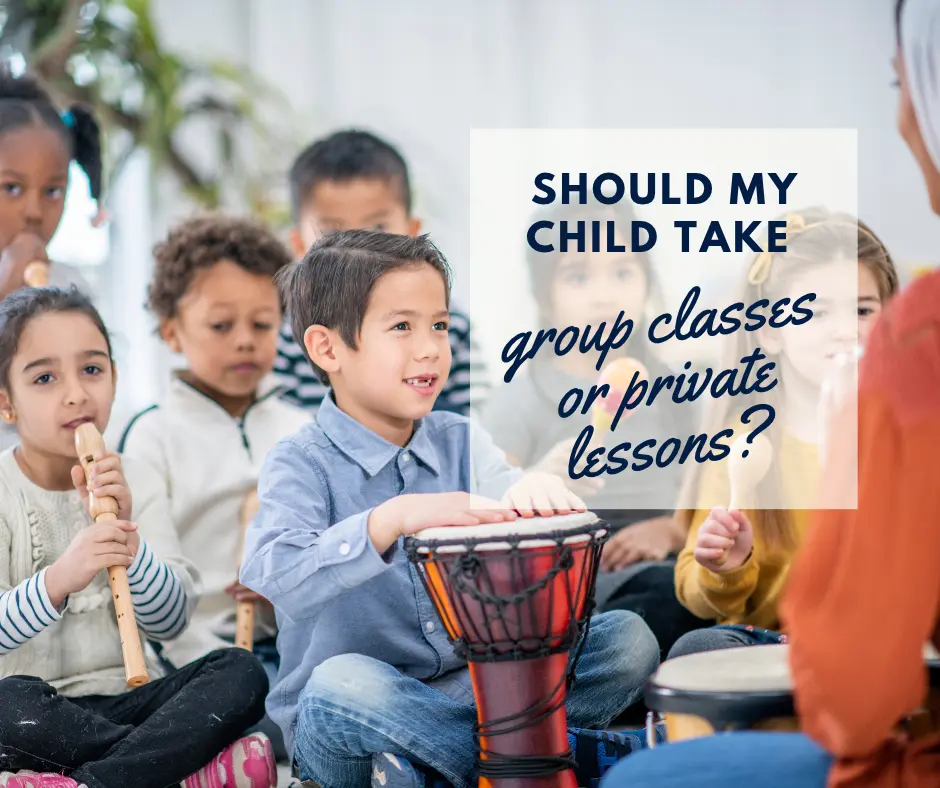
Group music classes allow children to experience music as something they can immediately participate in and enjoy with other kids. They can be especially helpful for young beginners who are still discovering what they like about music.
Some of the biggest advantages include:
- Learning through play: Young children often learn naturally through singing, movement, imitation, rhythm games, and exploration.
- Building confidence: Singing or playing alongside peers can feel less intimidating than being taught and evaluated by a private teacher.
- Exploring different musical skills: A well rounded group class may introduce rhythm, melody, listening, movement, and a variety of instruments.
- Potentially lower costs: Group lessons are often less expensive per student than private instruction.
Group classes can be particularly appealing for preschoolers who are not ready to exclusively focus on one instrument for an extended period. They can explore music, develop foundational skills, and discover their interests without feeling that they have to choose a single instrument right away.
What Are the Benefits of Private Music Lessons?
Private music lessons give children individualized attention and the opportunity to progress at a pace that is tailored to them. They can be especially useful when a child has a strong interest in a particular instrument or wants to develop specific skills.
Because the teacher works with one student at a time, lessons can be adjusted to the child’s abilities, interests, and unique goals. A teacher can spend extra time on a challenging passage, introduce more challenging material when a student is ready, or find a different way to explain a concept that is not clicking.
Private lessons may be a good fit when your child:
- Has a very clear interest in learning a specific instrument.
- Demonstrates an ability to focus for longer stretches of time.
- Needs a pace or approach that differs from that of a typical group class.
Private lessons are not necessarily the best starting point for every child. A young beginner who loves music but has not yet settled on an instrument may benefit more from a playful group environment. Likewise, a child who struggles with fast paced group classes may thrive with the individual attention that a private teacher can provide. It’s best to enroll your child in private lessons if their preference for an instrument has become very clear.
What do I need to consider before I pick group classes or private lessons?
For many young beginners, group music classes are an excellent place to start. They introduce basic musical concepts in an engaging environment without requiring children to commit to one instrument or demonstrate sustained focus right away. Private lessons can also be a good starting point, particularly for an older child who already knows which instrument they want to learn. A child who has spent years asking to play the piano, for example, may be excited to begin one-on-one instruction.
Rather than choosing based on age alone, consider your child’s readiness and interests. Can they participate in a fast paced shared activity? Do they enjoy being social and learning with other children? Are they eager to explore a particular instrument? How do they respond to new experiences? You do not need to have all the answers before beginning. A trial class or introductory lesson can help you see which environment feels encouraging and engaging for your child.
Related MMW article to link here: [How Do I Know If My Child Is Ready for Formal Music Lessons?]
What If My Child Is Shy or Easily Distracted?
A shy or easily distracted child can enjoy either group classes or private lessons. The important question is which setting helps your child feel comfortable enough to participate and learn. The overall goal should always be to identify which setting can help your child learn the most. Some shy children find it easier to join in when everyone is singing or playing together. They can observe first and participate when they feel ready. Other children feel more comfortable with a teacher who can give them individual attention without the pressure of keeping up with a group. Similarly, a child who has trouble sustaining attention may thrive in an active group class with frequent changes between movement, singing, and instruments. Another child may benefit from a private teacher who can adjust activities and pacing to match their needs. It is also worth remembering that a child does not have to be naturally outgoing, highly focused, or already musically confident to begin learning music; these are actually skills they may hone as a result of their music education!
How Do I Choose the Right Music Program for My Child?
The quality of the teaching and how well the program fits your child matter just as much as the lesson format. Before enrolling, consider these questions:
1. What will my child do during lessons? Look for age appropriate activities that encourage active participation, especially for young beginners.
2. Will my child be able to explore their interests? Choose a program that builds foundational skills while making room for the songs, instruments, and musical styles your child enjoys.
3. How much practice is expected at home? Make sure practice expectations are realistic for your child’s developmental stage and your family’s schedule.
How Can My Music Workshop Help My Child Get Started?
My Music Workshop offers affordable online music lessons that help children explore music and develop their skills. If you are looking for a flexible way to introduce music learning at home, you can explore the available lessons and see whether the program fits your child’s interests and your family’s routine.
Frequently Asked Questions
Are group music classes cheaper than private lessons?
Often, yes. Group classes generally cost less per student because the teacher works with several children at once. Prices vary by program, lesson length, location, and what is included.
Will my child learn as much in a group music class?
Children can develop valuable musical skills in group classes, including rhythm, listening, singing, and playing with others. Private lessons provide more individualized attention. The skills your child develops will depend on the curriculum, teacher, lesson format, and consistency of participation.
What age should my child start private music lessons?
There is no single best age for every child. Readiness depends on the instrument, the teaching approach, the child’s interests, and their ability to participate in lessons. Some children benefit from playful group music experiences before beginning individual instrument instruction.
What if my child wants to switch from group classes to private lessons?
It is perfectly reasonable to change formats as your child’s interests develop. A child who begins with group classes may eventually want more focused instruction on an instrument.
Can online music lessons work for children?
Yes, online lessons can be a useful option when the format, activities, and expectations suit the child’s age and needs. The best part is that children can revisit the content of their lessons as many times as they need to.
Ready to start lessons at home?
Step-by-step video lessons for kids 4 to 12 with Mr. Elias, with play-alongs and picture quizzes. Each lesson takes about 10 to 15 minutes. From $10 a month.