Should My Child Learn Piano First Before Another Instrument?
Quick answer
No, your child does not need to learn piano before another instrument. Piano is an excellent starting point because its visual layout makes it easier to explore melody, rhythm, scales, chords, and basic music theory. However, children can develop strong musical foundations through instruments such as guitar, drums, ukulele, and voice too. The best first instrument is one that matches your child’s interests, abilities, and developmental stage.
If your child is already excited about a particular instrument, there is no reason they must learn piano first. The goal is to help them develop a positive and healthy relationship with music while building skills they can carry throughout their musical journey.
Why Is Piano Often Recommended as a First Instrument?
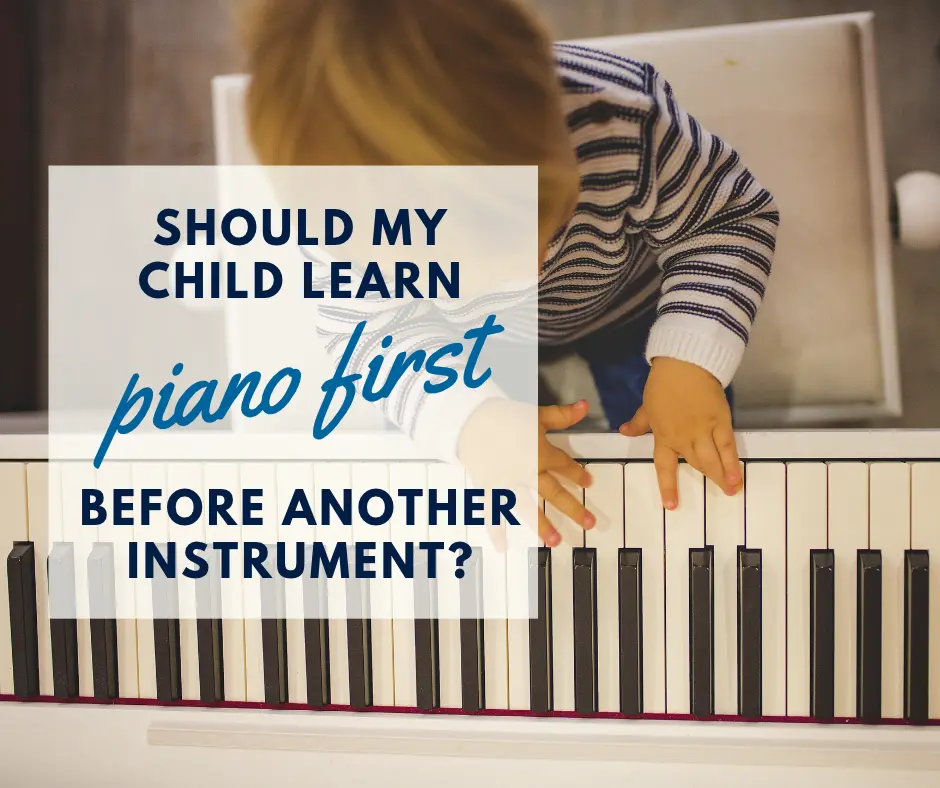
Piano is frequently recommended for beginners because it provides a visual and accessible introduction to how music works. It literally lays out music theory in black and white. Unlike many instruments, where the same note can be played in multiple positions, piano keys are arranged in a repeating pattern that makes musical relationships easier to see.
For example, children can begin exploring high and low notes simply by moving their hands across the keyboard. They can see how notes are arranged, recognize patterns, and experiment with melodies and chords. Because pressing a key produces a clear pitch, beginners can also experience an immediate connection between their actions and the sounds they create.
Piano offers several advantages for young musicians:
- Understanding melody: Children can see how individual notes come together to create familiar songs.
- Exploring rhythm: They learn to coordinate notes of different lengths and recognize rhythmic patterns.
- Developing coordination: Playing with both hands introduces coordination and independence.
- Learning music notation: Piano provides opportunities to become familiar with reading musical notes and understanding how they directly relate to the keyboard.
These skills can provide an incredibly helpful foundation when children eventually explore other instruments. However, piano is definitely not the only way to develop them, and learning piano first does not guarantee that another instrument will be easier.
What If My Child Already Wants to Learn a Different Instrument?
If your child is already excited about an instrument other than piano, that enthusiasm is worth taking seriously. There is no universal rule that children must begin with piano before exploring something else.
A child who loves drumming along to songs or is very energetic may be naturally drawn to percussion. Some children instinctively make up their own songs and sing to themselves as they play. Other children are drawn to certain instruments like a magnet. Please encourage them to pursue those threads of curiosity! These interests can offer valuable clues about where to begin. Motivation is an important part of learning an instrument because children need opportunities to practice, experiment, and work through challenges. When they feel connected to the music they are making, they may be more willing to continue developing their skills.
Before helping your child choose an instrument, consider:
- What music does your child enjoy? Pay attention to the instruments and sounds that naturally capture their attention.
- What activities does your child gravitate toward? A more active child may enjoy percussion, while a child who enjoys singing might be interested in studying voice or piano.
- Is the instrument appropriate for their developmental stage? Consider physical requirements, coordination, and the availability of appropriately sized instruments.
- Can your child try the instrument first? An introductory lesson or instrument demonstration can help them understand what learning the instrument might actually look like.
You do not have to make a permanent decision right away. The first instrument is simply a starting point in your child’s musical education.
Is It Better for Children to Learn Piano Before Switching to Another Instrument?
Learning piano before another instrument can be beneficial, but it is not a requirement. The musical skills children develop through piano can carry over to other instruments, particularly when they have experience with reading notes and understanding melody and harmony. For example, a child who has learned basic piano may recognize musical notes and rhythms more easily when beginning another instrument.
However, children who begin with another instrument can absolutely develop these same foundational skills along the way. A young guitarist can learn music reading, melody and chords, while a beginning drummer can develop an understanding of rhythm, coordination and timing. If your child eventually wants to learn piano after starting another instrument, they can bring the musical knowledge and listening skills they have already developed into their new lessons.
Should My Child Learn More Than One Instrument?
Children can absolutely explore multiple instruments, but it is usually helpful to establish a comfortable learning routine before adding another formal commitment. Learning an instrument requires time, repetition, and patience. Children need opportunities to practice what they learn, become comfortable with their instrument, and gradually develop confidence.
How Do I Choose the Best First Instrument for My Child?
The best first instrument is one that balances your child’s interests with their developmental readiness and the kind of musical experience your family can realistically support. If your child is undecided, piano is an excellent place to begin. Its visual layout and versatility make it a practical introduction to many musical concepts. But if your child already has a strong interest in guitar, drums, ukulele, or singing, that can be an equally meaningful starting point.
Before enrolling, consider the following:
- Interest: Is your child genuinely excited about learning this instrument?
- Readiness: Can they comfortably participate in lessons designed for their age and abilities?
- Accessibility: Is the instrument available in an appropriate size, and can your family accommodate the cost and practice requirements?
- Long-term enjoyment: Can you imagine your child enjoying opportunities to explore and develop their musical skills over time?
You might also consider starting with a general music class or introductory lesson before committing to a specific instrument. Sometimes children discover an interest they never knew they had simply by having the opportunity to experiment.
How Can My Music Workshop Help My Child Explore Music?
Every child’s musical journey looks a little different. Some children know exactly which instrument they want to learn, while others need time and exposure to discover what interests them. At My Music Workshop, we believe children should have opportunities to explore music, develop foundational skills, and build confidence at their own pace. Our affordable online music lessons offer families a flexible way to introduce music education at home. If your child is curious about music but you are unsure where to begin, exploring different musical interests can be a wonderful first step.
Frequently Asked Questions
Is piano the easiest instrument for a child to learn?
Piano is often considered approachable for beginners because its keys are arranged in a visible pattern and produce clear pitches. However, the easiest instrument depends on the child’s interests, abilities, and learning preferences.
What is the best first instrument for a child who loves music?
There is no single best choice. Piano, drums, guitar, ukulele, and voice can all be excellent starting points. Consider what your child enjoys listening to and the kinds of musical activities that naturally interest them.
Can my child learn guitar or drums without knowing piano?
Absolutely. Children can begin learning guitar, drums, and many other instruments without any previous piano experience.
Conclusion
Ultimately, your child does not need to learn piano before exploring another instrument. While piano offers a wonderful introduction to musical concepts, children can develop strong musical foundations in many different ways. The best place to start is with an instrument that sparks your child’s curiosity and makes them excited to learn.
Carole Crocco is a music educator with My Music Workshop who has extensive experience teaching young children and helping families introduce music in fun and developmentally appropriate ways. She is also a classically trained soprano and singer songwriter.
Ready to start lessons at home?
Step-by-step video lessons for kids 4 to 12 with Mr. Elias, with play-alongs and picture quizzes. Each lesson takes about 10 to 15 minutes. From $10 a month.