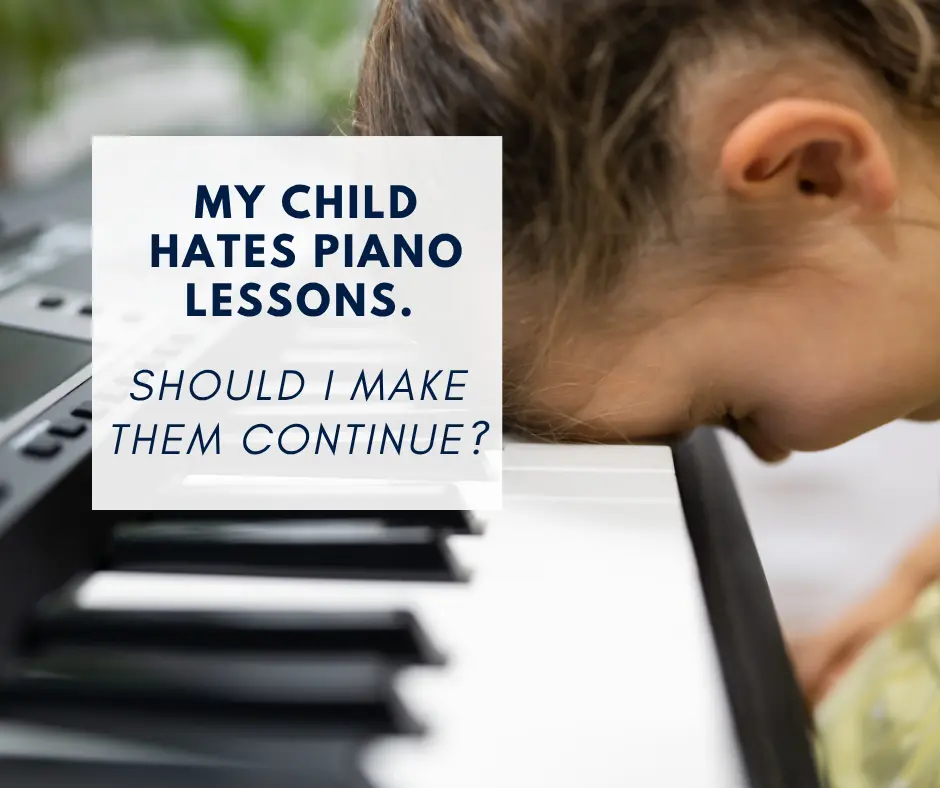
My Child Hates Piano Lessons. Should I Make Them Continue?
Quick answer
If your child says they hate piano, don’t immediately quit and don’t immediately force them to continue. First, figure out what is it that they actually dislike. In the most relaxed and casual way possible, kindly inquire whether the problem is having to practice, the repertoire, difficulty level, the piano curriculum, or feeling overwhelmed. Experiencing frustration is a completely normal part of learning something new. In fact, it’s important and healthy for kids to build up a frustration tolerance to learn new things, but if the frustration is turning into distress, that is important to address. Occasional frustration is a normal part of learning something difficult, but persistent distress deserves your attention. The best thing to do is to try and scale back on the amount of time they are playing piano and see if you can help your child connect to the joy of making music again. You can help them get re-inspired by taking them to see a concert where someone is playing piano, making a piano playlist together, connecting with a friend or family member who plays piano, or getting them to articulate what they liked about learning piano in the past.
What Does Your Child Mean When They Say, “I Hate Piano”?
Ouch. Hearing your child say, “I hate piano,” can be a tough pill to swallow. But those words may not tell the whole story. Your child might be struggling with practicing, feeling unsure about what to work on, getting frustrated when something is difficult, or simply feeling overwhelmed or tired by other demands in their life. Your job is to be a detective and figure out what is really bothering them. Try to get to the root of the problem and identify the part of piano that is making things feel difficult.
Is Your Child Frustrated Because Piano Is Getting Harder?
Some children, especially kids who tend to naturally excel at whatever they try, can really struggle when they encounter their first real challenges in learning piano. Piano is one of the most humbling instruments for anyone to play and that is also why it is so amazing and satisfying to learn. Learning two hand coordination, reading new notes, or working on a tricky rhythm requires some grit, and that can be a challenge for kids who sailed through the simpler early piano fundamentals. It cannot be overstated that this is a really normal part of learning. Think about learning to ride a bicycle. The first time a child realizes that balancing is harder than it looked, they might throw the bike down and announce that they hate riding bikes. But that doesn’t mean they should not ever ride a bicycle again. The same can be true with music. In this situation, it’s better to help your child break things down into smaller pieces so that they can feel successful again. Sometimes, quick wins can help kids find their momentum and can help them to stay motivated as they struggle with more difficult material.
Does Your Child Like the Music They Are Learning?
This is a sometimes overlooked question. There is no teacher or music learning program that can guarantee that your child will love every single piano exercise or piece. Children need foundational skills and not every single part of a curriculum will be their favorite. However, encouraging your child to figure out some songs or tunes that they have some kind of connection to or excitement about can reinvigorate them in their learning journey. Maybe they’d like to learn the theme to one of their favorite movies or video games. Try to help your child find some things that excite them and you will likely see the spark of joy come back into their eyes when talking about piano.
What If My Child Hates Practicing but Loves Their Lessons?
If your child happily attends their lesson, enjoys playing for you, gets excited when they learn a new song, or occasionally sits down at the piano independently, I would pay attention to those signs.They may not hate piano but they may hate practicing piano. This can be an easier situation to work on. Maybe practice needs to be shorter or the time of day is wrong. Maybe your child needs more specific instructions or they need you nearby. If you are open to doing a practice chart, you can go to a craft store and make a cool practice chart together with superhero or sparkly stickers. Keep those stickers hidden and don’t bring them out unless they have actually practiced piano. This can help practice time feel more fun and personal to them. Plus, they can visually track their own progress and that can be really important for kids.
Should I Force My Child to Keep Going?
I think there is an important distinction between encouraging perseverance and forcing a child through misery. Learning something difficult requires perseverance. Children need opportunities to experience the satisfaction of sticking with something when it becomes tough for them. At the same time, the goal of music education should not be to create a child who associates music with anxiety, shame, or constant conflict with their parents. There are children who genuinely need encouragement to push through a difficult season. There are also children who have been trying for a long time to tell their parents that something about the experience is not working for them. Again, you do not have to make any quick decisions about whether or not to let them quit just yet, but you should do your best to discern between what is healthy challenge or a chronic burden for them.
What Should I Try Before We Quit Piano?
Before making a final decision, experiment with the following suggestions and see if any of these creates a nice reset.
Make practice smaller. Try five or ten focused minutes rather than insisting on a long session. Hint: use a visual timer to help kids feel like their practice time is more manageable!
Change the repertoire. Find one song your child genuinely wants to learn.
Change the routine. Experiment with practicing at a different time of day.
Give your child some ownership. Let them choose between two songs or decide which piece they want to play for the family. They can also make a “music video” to share with an aunt, uncle or grandparents. Music is meant to be shared!
Try a different lesson format or teacher. Sometimes the right adjustment can completely change a child’s experience.
When Should I Consider Letting My Child Quit?
Sometimes quitting really is the right decision. If your child has consistently expressed that they do not want to continue, has no meaningful interest in playing, and attempts to adjust music, routine, or expectations have not helped, it may be time to consider whether another musical experience would be a better fit. And remember, quitting piano does not mean quitting music. It’s possible that piano just isn’t the right fit. There are so many other cool entry points into music. Drums, ukulele, singing, guitar just to name a few! Sometimes, taking some time off can also be helpful! 6 months to 1 year can allow for some space and time to reconsider whether they want to give it another try.
Frequently Asked Questions
Should I make my child practice if they say they hate piano?
Try to understand why they are resisting before increasing the pressure. Shorter practice sessions, clearer goals, different music, or a new routine may help. If resistance is persistent and accompanied by significant distress, take some time to really consider if piano is the right fit.
Is it normal for children to want to quit piano?
Yes. Children can become frustrated, bored, overwhelmed, or simply curious about another activity. Wanting to quit does not automatically mean piano is the wrong fit.
Should I let my child quit an activity they don’t enjoy?
There is no universal rule. Before quitting, consider whether the problem can be addressed by changing something in the routine like music, expectations, schedule, or lesson format. If the activity remains consistently negative despite reasonable changes, another musical path may be the best option.
What if my child likes piano lessons but refuses to practice?
This is extremely common. A child can enjoy music and still dislike practicing. Start with short, specific practice goals and make the routine predictable rather than turning every session into a negotiation.
Conclusion
If your child says, “I hate piano,” you do not have to panic. You also do not have to immediately pull the plug. Take a step back and get curious. Ask what they actually dislike. Pay attention to what happens during lessons, what happens during practice, what kinds of music make them light up, and how they respond when something becomes difficult. Sometimes your child needs encouragement to keep going and other times, they really are ready to move on.
Ready to Find the Right Musical Fit?
At My Music Workshop, we believe music education should meet children where they are. Our beginner online music lessons in piano, drums, ukulele, and singing are designed to help young learners build skills while developing confidence and enjoyment. If piano isn’t clicking for your child, that does not mean your child’s musical journey has to end. It may simply mean that we need to find the musical doorway that opens for them. Families can try My Music Workshop free for 7 days and explore a fun, supportive approach to music learning.
About the Author
Carole Crocco is a music educator with My Music Workshop who has extensive experience teaching young children and helping families introduce music in fun and developmentally appropriate ways. She is also a classically trained soprano and singer songwriter.
Ready to start lessons at home?
Step-by-step video lessons for kids 4 to 12 with Mr. Elias, with play-alongs and picture quizzes. Each lesson takes about 10 to 15 minutes. From $10 a month.