How Do I Know If My Child Is Ready for Piano Lessons?
Quick answer
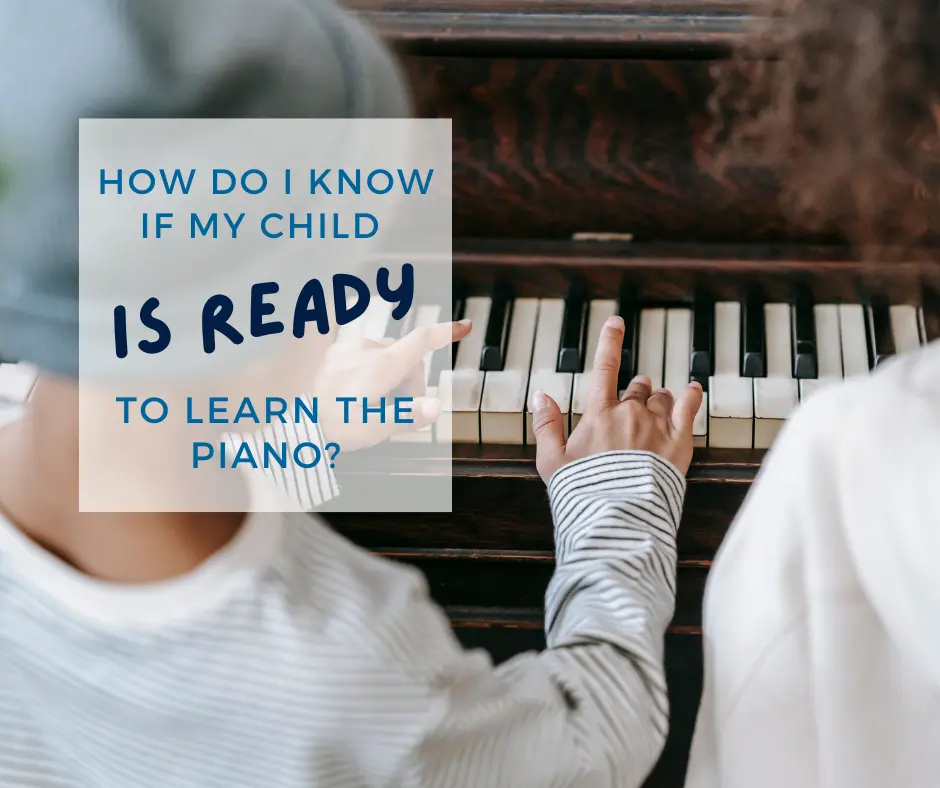
How do I know if my child is ready for piano lessons?
Look for curiosity, attention, coordination, and perseverance. Your child may be ready if they are naturally interested in music, can focus on an activity for several minutes, follow simple directions, use their hands confidently for creative activities, and keep trying when something is difficult. Previous experiences with singing, dancing, or music classes are helpful but not required. Age is only one factor. Your child’s interest and developmental readiness are much more important.
Is There a Perfect Age to Start Piano Lessons?
This is probably the first question that comes to mind when parents begin considering piano lessons. You may have heard that children should start at four, five, six, or seven, and it can be confusing to know which advice to follow. Some children seem fascinated by the piano from an incredibly young age, while others don’t show much interest until they are older. Truthfully, there is no magic birthday when a child suddenly becomes ready for piano lessons.
A five year old who begs to play the piano and happily spends twenty minutes building a complicated Lego structure may be very ready for lessons. Another five year old may have very little interest in sitting at a piano and prefer to be outdoors climbing play structures. Those children may both end up playing piano and loving it, but they are not necessarily equally ready at the same time. The most important thing to consider is what your child is showing you about their readiness through their unique set of interests, temperament, and developmental stage.
How Interested Is My Child in the Piano?
Before your child becomes a piano student, become a student of them! Spend some time observing how your child naturally interacts with music and what kinds of musical experiences hold their attention. You do not need to give them a formal test or sit them down for an official “piano readiness assessment.” Your most trustworthy source of information is your child.
Are they excited to watch YouTube videos of people playing piano? Do they immediately walk toward a piano when they visit someone’s house? Do they have a toy piano or keyboard that they constantly return to during playtime? Pay attention not only to whether your child likes music, but to how long they engage with it. A child who repeatedly returns to something they find interesting is giving you excellent data to work with. Sustained curiosity is one of the best reasons to consider beginning piano lessons. And if your child isn’t showing much interest just yet, that is completely okay. There is no need to rush into something your child doesn’t appear wholly ready for.
Can My Child Follow Simple Directions?
Piano lessons require children to listen carefully and then translate what they are hearing into a physical action. A teacher may say, “Put your right hand here,” or “Play these three notes”. Your child does not need to follow directions perfectly. Young children are still developing their ability to listen, process things, and respond appropriately. What you are looking for is a basic ability to participate in an activity that requires some focus and a point of reference for following directions. Think about some everyday activities! Can they follow a simple recipe with your help, play a game with basic rules, or follow directions while building a Lego set? These activities may seem completely unrelated to piano, but they provide useful clues about your child’s readiness to learn because they require a sequential thought process.
How Long Can My Child Stay Engaged With an Activity?
Your child does not need to sit perfectly still before beginning piano lessons. Young children are young children. They are meant to move, wiggle, ask questions, get distracted, and occasionally become fascinated by something happening outside the window during a moment when they need to focus. This is totally normal! The real question is are they able to re-engage with the activity once they have become distracted. Once again, consider the things that your child enjoys. Can they work on a puzzle, spend several minutes drawing or painting, play independently without needing constant entertainment from an adult? All of these everyday, normal activities for kids can help reveal where their developing attention span is at.
What Does Lego Have to Do With Piano Lessons?
Actually, a whole lot. Some of the best clues about piano readiness are hiding in activities that are seemingly unrelated to music. Watch your child build with magnetic tiles. Can they manipulate the pieces and experiment with different arrangements? Watch them create a Lego structure and see if they can follow directions while also making their own choices. Observe them working on an art project. Are they comfortable using crayons, paintbrushes, glue, pom poms, pipe cleaners, or other materials? These activities may look like ordinary preschool play, but they are full of important developmental work.
Children are developing fine motor skills, coordination, sequencing, spatial awareness, focus, and problem solving as they play. Those skills are integral to piano. Playing piano requires children to coordinate what they see with what their hands are doing. They need to remember patterns, distinguish between notes, move their fingers with increasing control, and eventually coordinate both hands. If your child is enthusiastic about creative activities and comfortable using their hands for different purposes, those are encouraging signs. If they aren’t there yet, please don’t be discouraged. Every child is on their own developmental trajectory. Your job isn’t to compare your child with another child their age, but to understand where your child is right now.
How Does My Child Handle Frustration?
This is one of the most important questions parents can ask. Learning an instrument is not always easy. Your child will encounter struggle and that’s actually one of the most valuable parts of learning an instrument. You learn to persist through discomfort to improve your skills. So ask yourself: How does my child respond when something is hard? Are they able to try again with a little encouragement? Are they able to accept help when they encounter an obstacle? If they are still working on frustration tolerance, that does not mean they can never take piano lessons. It simply gives you useful information about the kind of support they may need from a teacher and parent.
Does My Child Need to Know How to Read Before Starting Piano?
Reading readiness is useful to consider, but it should not be treated as a strict requirement. Your child does not need to be able to sit down and read a page of sheet music before beginning piano lessons. Young beginners can be introduced to musical concepts through patterns, colors, pictures, repetition, listening, and other developmentally appropriate approaches.
At the same time, basic literacy skills can be helpful. Recognizing letters and symbols, understanding that marks on a page communicate information, and beginning to track visually from left to right can all support the process of learning music. Try to assess if your kiddo has grasped the concept that symbols can communicate information. Another clue in the discernment process before starting piano.
What If My Child Is Interested in Piano but Doesn’t Seem Ready Yet?
Sometimes parents can feel a little stuck here. Perhaps your three year old loves banging on the piano but cannot participate in a structured lesson yet or your four year old constantly asks to play but has a very short attention span. It’s possible your five year old is interested but becomes easily frustrated. You don’t necessarily have to choose between formal piano lessons and doing nothing at all. Continue to cultivate their interest in music! You can do that through listening to classical music stations together, singing songs, having silly dance parties, going to a music store, or going to see a concert. Let your child develop a love for music before they have to potentially work at it.
Is There a Simple Way to Know If My Child Is Ready?
If you’re still unsure, think about these questions as a whole rather than treating them like a test.
Is my child interested?
Do they show genuine curiosity about piano or music?
Can my child engage?
Can they spend several minutes focused on something they enjoy?
Can my child follow directions?
Can they listen to an adult and attempt a simple instruction?
Are their fine motor skills developing?
Do they enjoy building, drawing, creating, manipulating objects, or working with their hands?
Can my child handle small frustrations?
Can they try again, accept help, or return to something after making a mistake?
Does my child enjoy music?
Do they sing, dance, clap, listen, or participate in musical activities?
Is my child beginning to understand patterns and symbols?
Are they recognizing letters, numbers, pictures, colors, or other systems that communicate information?
Frequently Asked Questions
What is the best age to start piano lessons?
There is no single perfect age. Many children begin during the preschool or early elementary years, but readiness varies considerably. Interest, attention, developmental skills, and the type of instruction matter more than a specific birthday.
Can a four year old learn piano?
Yes, some four year olds are ready for piano lessons, particularly when they show genuine interest, can participate in a structured activity, and have an age appropriate curriculum and teacher. Other children may benefit from waiting.
What if my child has a short attention span?
A short attention span does not automatically mean your child isn’t ready. Look for their ability to engage with activities for short periods, follow simple directions, and return to something after becoming distracted.
What if my child loves piano but doesn’t seem ready for formal lessons?
Keep nurturing the interest. Listen to music together, sing, purchase a cost effective keyboard, watch performances, and give your child opportunities to experience music without pressure.
Should my child have a piano at home before starting lessons?
Having access to an instrument is helpful because children need opportunities to explore and practice what they are learning. However, you do not necessarily need to make a major investment before determining whether piano is a good fit.
Conclusion
If you are wondering whether your child is ready for piano lessons, resist the temptation to look only at their age. Instead, look at your child. Watch what they gravitate toward. Most importantly, listen to their curiosity. There is no prize for starting the earliest, and there is no reason to rush a child into formal lessons before they are ready to enjoy them. When the timing is right, it can be a really positive start to a lifelong journey of playing and enjoying music.
Ready to Explore Piano Lessons?
If your child is showing an interest in piano, My Music Workshop offers engaging online piano lessons designed to make music learning approachable and enjoyable for young students.
With flexible online music lessons, children can learn from home while parents can support their musical journey in a familiar environment.
Families can explore our:
- Piano lessons
- Drum lessons
- Ukulele lessons
- Singing lessons
Try My Music Workshop free for 7 days and see whether your child is ready to begin their musical journey.
About the Author
Carole Crocco is a music educator with My Music Workshop who has extensive experience teaching young children and helping families introduce music in fun and developmentally appropriate ways. She is also a classically trained soprano and singer songwriter.
Ready to start lessons at home?
Step-by-step video lessons for kids 4 to 12 with Mr. Elias, with play-alongs and picture quizzes. Each lesson takes about 10 to 15 minutes. From $10 a month.