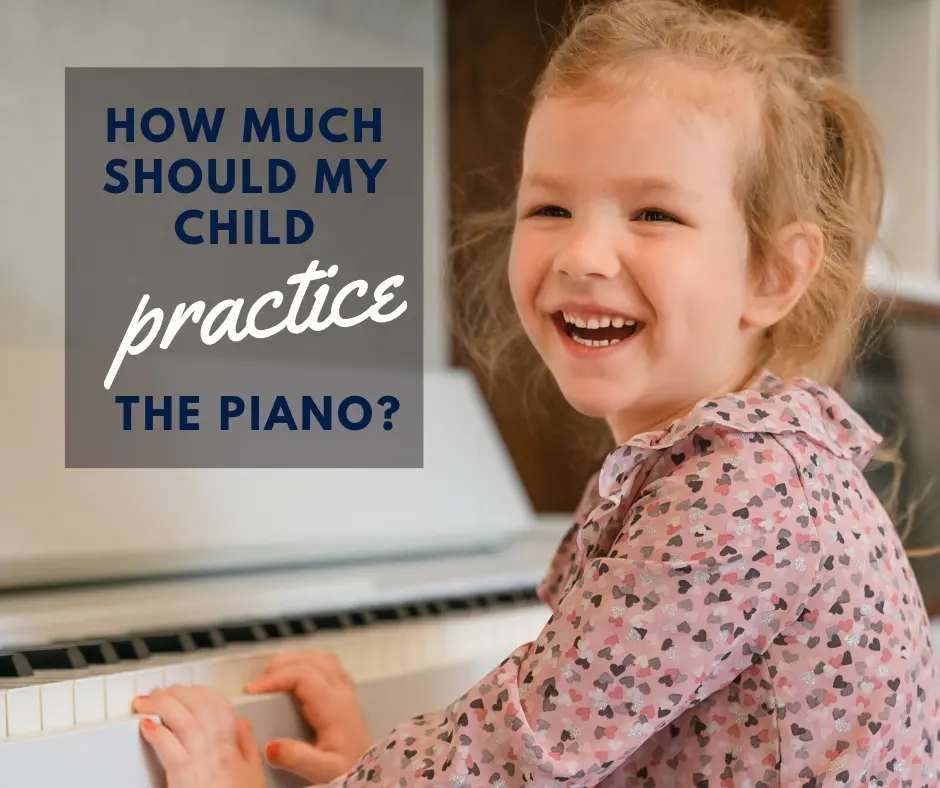
How Much Should My Child Practice Piano?
Quick answer
For young beginners, short, consistent practice sessions are usually more useful than one long practice session once a week. There is no perfect number of minutes for every child, but starting with about 5 to 15 minutes at a time, several days a week, can be a practical goal for many young music students. The most important thing is to build a predictable habit that fits your child’s age, attention span, temperament, and daily schedule. A focused five minute practice session can be much more valuable than a frustrated thirty minute battle.
How Much Piano Practice Does My Child Actually Need?
Practice can be a surprisingly loaded part of music education for both parents and kids. We talked in our previous article about how to get your child to practice piano. Now we are tackling the question that naturally comes next: How long should they actually practice?
For many young beginners, 5 to 15 focused minutes several times a week can be a very good place to begin. The goal should never be to see how long you can keep your child sitting at the piano but to help them return to the piano time and time again.
As someone who has studied music for many years and has helped young students learn instruments, I believe that the frequency of practice matters more than the duration of practice. I almost always advise against cramming all of your child’s piano practice into one long session once a week. It may accomplish something, but frequent engagement with piano is a better approach!
I like to think about music practice a little bit like physical fitness. If you went to the gym for two hours every Sunday and did absolutely nothing physical for the rest of the week, you would probably not feel that your body was getting the consistent training it needs. Shorter, regular opportunities to move and exercise throughout the week can actually be much easier to sustain and add up to lasting changes over time. Piano practice works in a similar way. Consistency matters! There is no magic number of minutes that guarantees musical progress. Your child’s age, personality and goals all matter more than the minutes logged at the piano.
How Long Should a Beginner Practice Piano?
Here are some suggested time blocks as you consider your child’s age and try to cultivate healthy piano practice habits.
5 to 10 minutes: A great starting point for very young beginners or children who are just establishing the habit and getting comfortable with the piano.
10 to 15 minutes: A reasonable goal for many elementary age beginners once they have developed some comfort with the instrument.
15 to 30 minutes: Something older or more experienced students may gradually work toward as their skills and attention develop.
These are not requirements but meant to be considered as starting points. Some children will naturally want to play longer because they are deeply interested in what they are learning. If your child sits down and happily plays for twenty minutes, by all means, let them play on! Likewise, if your five year old is struggling to stay engaged after seven minutes, that does not mean they are failing at piano. It may mean that seven minutes was what they could do today and that is okay.
Does the Time of Day Matter?
For some kiddos, it sure can! One of the best ways to make piano practice happen consistently is to try and connect it to something that already happens every day. For some children, practicing after breakfast can be a wonderful option. Their brains may feel fresh in the morning, and five or ten minutes of focused piano can become a really cool way to begin the day.
Other children may enjoy practicing immediately after coming home from school. For these children, piano can become a transition between the structure of the school day and the rest of the afternoon. They may need a few minutes to decompress, but once they settle in, playing music can actually give their brains a break from the rigor of the school day.
Other children love having an audience. For them, after dinner might be the perfect time to sit down and play while the family listens. Your child gets to share something they have been learning, and the rest of the family gets to support them in that.
Figuring out the best time of day for your child to practice can be a process of trial and error but once you figure it out, this can be a really helpful tool for your child’s journey with piano.
Should My Child Practice Even When They Don’t Feel Like It?
This is where things can sometimes feel tricky. It’s so important for children to learn that worthwhile activities sometimes require effort even when we are not completely in the mood. At the same time, you do not want every piano session to become a battle of wills. If your child occasionally says, “I don’t want to practice today,” it’s not the end of the world or cause for them to stop their piano learning. Just like us, kids have days when they feel tired, distracted, or waylaid by some other activity. I would encourage you to zoom out and look at the bigger picture. Are they able to return to the piano after a few days off? Does it seem like they are having fun and enjoying the process of learning overall? If so, please know that some occasional resistance is perfectly normal.
What Is the Best Piano Practice Routine for a Young Child?
If you are looking for a simple place to start, try this:
Choose a predictable time. Attach piano to something your child already does each day like after breakfast or dinnertime.
Start small. Five to fifteen minutes can be plenty for a young beginner.
Stay nearby when possible. Your presence alone can be helpful without turning you into the piano police.
Celebrate small efforts. Notice when something sounds better or when your child remembers something from their previous lesson.
Stop before practice becomes a battle. You want your child to finish practice time thinking, “I can definitely do that again tomorrow.”
Frequently Asked Questions
How many minutes should a child practice piano each day?
There is no universal number, but many young beginners can make meaningful progress with approximately 5 to 15 focused minutes several days a week. As children develop, their practice time can gradually increase.
Is it better to practice piano every day or once a week?
Regular practice throughout the week is generally preferable to concentrating all practice into one long session.
What if my child refuses to practice?
Stay curious if resistance comes up. The problem may be the practice environment, the time of day or a lack of understanding about what they are supposed to practice.
Does my child need to practice every day?
Not necessarily. Consistency is the priority! If daily practice creates unnecessary conflict, establish a realistic routine that your family can sustain.
Conclusion
The beautiful thing about music is that progress does not always announce itself right away. It may take some time, but small practice sessions over time can amount to remarkable progress. Progress that your child can really feel proud of themselves for. Don’t worry so much about making your child practice for a certain number of minutes. Focus on helping them return to the piano regularly with lightheartedness and a sense of ownership over their musical learning.
Ready to Start Learning?
My Music Workshop offers engaging online piano lessons designed specifically for young learners. With flexible lessons and beginner friendly videos that are truly fun for kids, your child can build musical skills from home while families develop a practice routine that works for their lives.
Families can also explore:
• Piano lessons
• Drum lessons
• Ukulele lessons
• Singing lessons
Try My Music Workshop free for 7 days and discover a fun, supportive way to introduce music into your child’s life.
About the Author
Carole Crocco is a music educator with My Music Workshop who has extensive experience teaching young children and helping families introduce music in fun and developmentally appropriate ways. She is also a classically trained soprano and singer songwriter.
Have more questions? Read our answers to 23 questions parents ask about music lessons, from the best age to start to how long kids should practice.
Ready to start lessons at home?
Step-by-step video lessons for kids 4 to 12 with Mr. Elias, with play-alongs and picture quizzes. Each lesson takes about 10 to 15 minutes. From $10 a month.