Should You Ever Force a Child to Practice Music?
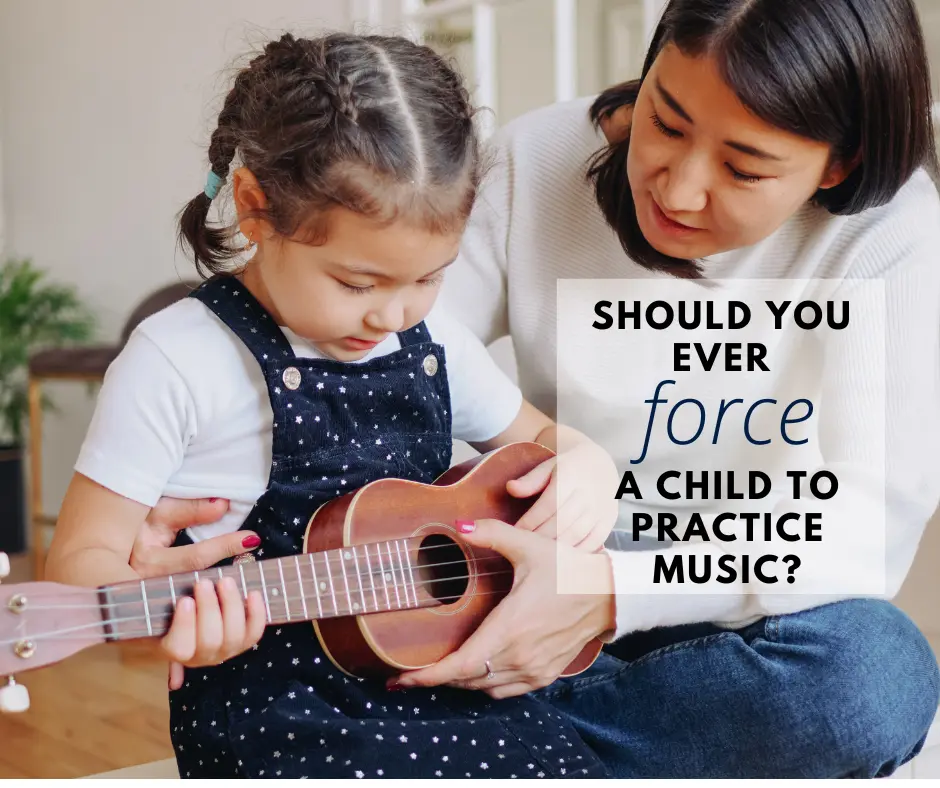
If your child is enrolled in music lessons, this question probably comes up more often than you expected. Maybe practice turns into a struggle. Maybe your child resists every time you bring it up. Maybe you worry that if you do not push, progress will stall.
So let us address it directly.
Should you ever force a child to practice music?
Short answer: no.
Long answer: you do need structure, consistency, and guidance. Just not force.
This blog will help you understand the difference and give you practical strategies you can use immediately, even on the busiest days!
Why Forcing Practice Usually Backfires
When practice becomes a power struggle, the learning often stops.
Forcing practice can lead to:
- Increased resistance and frustration over time.
- Anxiety around music time, even before practice begins.
- A negative emotional association with lessons.
- Loss of intrinsic motivation and curiosity.
- Children complying short term, but disengaging long term.
Music learning is deeply connected to emotion. When music feels stressful, progress slows down rather than speeds up.
What Children Actually Need Instead of Force
Children thrive when music practice feels supported rather than demanded.
Instead of force, children benefit from:
- Clear expectations that feel predictable and fair.
- Consistent routines that remove daily negotiation.
- Short and achievable practice goals.
- Encouragement that focuses on effort, not perfection.
- A sense of choice and autonomy within boundaries.
Structure creates safety. Force creates resistance.
The Difference Between Force and Structure
This distinction matters more than anything else.
Force sounds like:
- You HAVE to do this right now.
- Sit still and finish the whole thing!
- We are not stopping until it is done.
- You are not trying hard enough.
Structure sounds like:
- Music time is part of our daily routine!
- Let us try for five minutes and see how it feels.
- Would you like to start with this song or that one?
- We can stop as soon as the timer goes off.
Children respond far better to structure that feels calm and predictable.
What Healthy Music Practice Looks Like
Practice does not need to be long to be effective.
For many children, especially younger ones, healthy practice looks like:
- Five to ten minutes at a time, depending on age.
- One clear focus or goal per session.
- Repetition that feels playful rather than pressured.
- Stopping before frustration peaks.
- Ending on something your child can do well.
Consistency matters more than duration!
Why Resistance Happens in the First Place
Understanding why your child resists practice helps you respond more effectively.
Common reasons include:
- Fatigue after a long school or daycare day.
- Frustration with a skill that feels hard or confusing.
- Feeling overwhelmed by too many expectations at once.
- Lack of clarity about what practice actually means.
- A natural need for movement, play, or connection.
Resistance is communication, not defiance.
What To Do When Your Child Refuses to Practice
Instead of escalating the situation, try one of these approaches.
Shorten the session
- Cut the practice time in half.
- Focus on one small, specific task.
- Stop early if your child is genuinely trying.
Offer limited choices
- “Which song should we start with today?”
- “Do you want to sit, stand, or move while playing?”
- “Should we use a timer or practice until the song ends?”
Join them
- Sit with your child during practice.
- Learn alongside them, even if you are not musical.
- Let your child teach you something they know!
Shift the activity
- Add clapping, tapping, or movement.
- Turn repetition into a game.
- Listen to music together instead of playing.
Flexibility keeps the door open.
When Is It Okay to Insist on Practice?
There is a difference between forcing and holding a boundary.
It is reasonable to insist on practice when:
- Expectations were clearly discussed ahead of time.
- The practice session is short and age appropriate.
- Your tone remains calm and supportive.
- You stay present rather than walking away.
- The focus is on effort, not flawless results.
Think of it as guiding your child through discomfort rather than pushing them through resistance.
The Long Term Goal of Music Practice
The goal of music lessons is not daily compliance.
The real goals are:
- Building a positive relationship with music.
- Developing perseverance and confidence.
- Learning how to practice effectively over time.
- Experiencing success through effort.
- Feeling capable, supported, and proud!
These goals cannot be achieved through force.
How High Quality Music Lessons Reduce Practice Struggles
Practice resistance often decreases when lessons are well matched to a child’s developmental level.
Strong music programs:
- Break skills into manageable, clear steps.
- Use repetition in creative and engaging ways.
- Set realistic expectations for each age.
- Emphasize progress over performance.
- Support emotional growth alongside musical skills.
Online programs like My Music Workshop are designed with these principles in mind. Families appreciate lessons that feel approachable, engaging, and flexible enough to fit real life. When children feel successful during lessons, practice at home becomes far less stressful.
How Parents and Educators Can Reframe Their Role
You do not need to be the enforcer!
Your role is to:
- Create a consistent and predictable routine.
- Offer encouragement and emotional presence.
- Help break tasks into small, doable steps.
- Model patience, curiosity, and flexibility.
- Celebrate effort as much as progress.
When adults stay calm, children feel safe enough to try.
Signs Practice Is Working Without Force
You may notice:
- Less resistance over time.
- Shorter warm up periods.
- Increased confidence during lessons.
- Willingness to try again after mistakes.
- Spontaneous music making outside of practice time.
These are strong indicators of healthy musical growth.
What If My Child Still Wants to Quit?
Wanting to quit does not always mean lessons are not working.
Before making a decision, consider:
- Is my child overwhelmed, or just tired?
- Are expectations realistic for their age?
- Does my child still enjoy music in other ways?
- Would a short break or reset help?
Often, adjusting the approach makes all the difference.
Final Thoughts
You do not need to force your child to practice music for lessons to be effective. In fact, force often does more harm than good. What children need most is structure, consistency, encouragement, and a sense that music is a safe place to learn and grow.
When practice feels manageable and supported, children are far more likely to engage willingly and build skills that last.
If you are looking for child centered online music lessons that support this kind of healthy relationship with music, My Music Workshop offers programs designed to meet children where they are. These lessons help families stay consistent without turning music into a daily battle.
Gentle guidance goes a long way.
Ready to start lessons at home?
Step-by-step video lessons for kids 4 to 12 with Mr. Elias, with play-alongs and picture quizzes. Each lesson takes about 10 to 15 minutes. From $10 a month.