How to Create a Musical Home Without Breaking the Bank
Music has the amazing power to bring families together. It sparks creativity, boosts learning, and adds so much joy to daily life. But as parents, it’s easy to wonder: Do I need to spend a fortune on instruments, lessons, and fancy gear to give my child a great music experience?
Good news — you absolutely don’t! At My Music Workshop we believe every family can build a rich, musical environment at home without spending a lot. In fact, some of the best musical moments happen with simple tools, everyday items, and a bit of creativity.
If you’d love to nurture your child’s musical side but want to keep it budget-friendly, here are some practical tips to help you create a musical home — without breaking the bank.
1. Use What You Already Have
Believe it or not, you probably have a treasure chest of musical tools sitting right in your kitchen drawers and toy bins.
- Pots, pans, and wooden spoons make perfect homemade drums.
- Empty containers and jars can become shakers when filled with rice, beans, or pasta.
- Plastic tubs or buckets can stand in for drums or bongos.
- Rubber bands stretched over a tissue box can mimic a simple guitar or harp.
Set up a “homemade band” with your child. Give each item a fun name — the “Pasta Maraca” or the “Bucket Bass Drum” — and watch your little musician light up!
This not only saves money but helps children understand that music is about creativity and expression, not just expensive instruments.
2. Find Budget-Friendly Instruments
If your child is ready for a real instrument, don’t worry — there are plenty of affordable options out there.
Some great beginner instruments that won’t empty your wallet include:
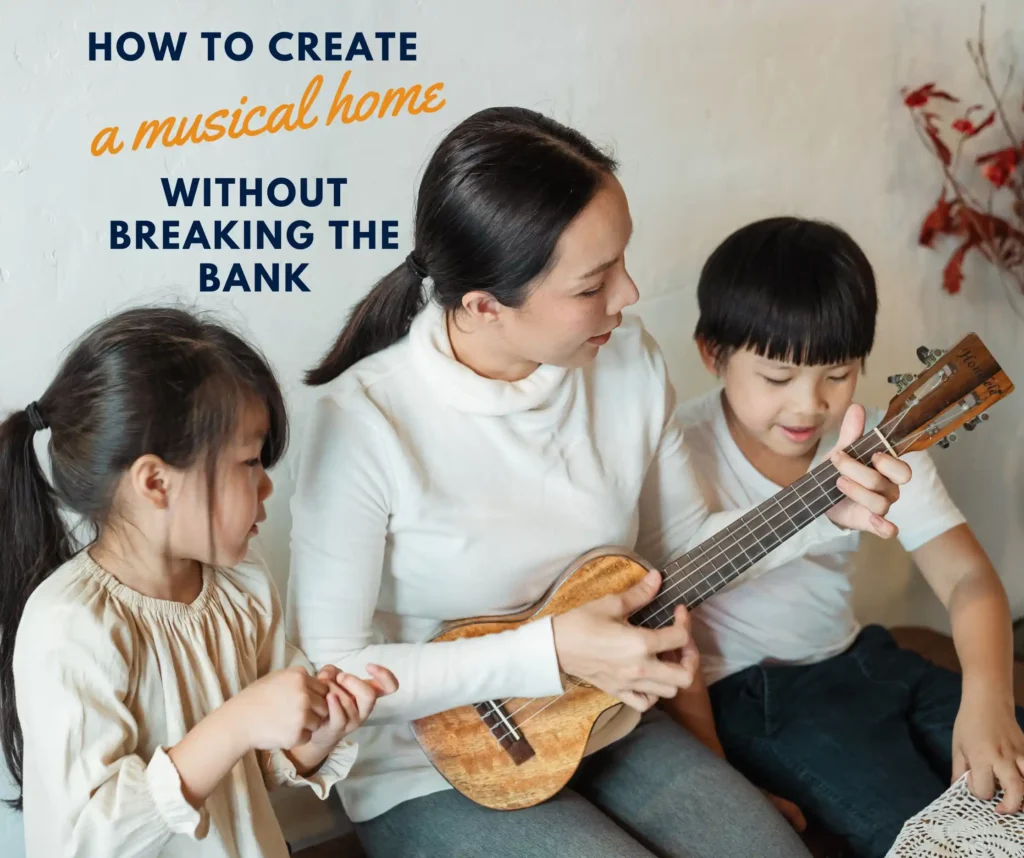
- Ukulele: Small, lightweight, and usually very affordable.
- Recorder: A classic starter wind instrument found for just a few dollars.
- Keyboard: A basic electronic keyboard can cost less than you think.
- Egg shakers and tambourines: Great for toddlers and preschoolers.
Check local thrift stores, yard sales, or online marketplaces. Many families sell gently used instruments at a fraction of the cost. Some community music programs even lend instruments for free or at low cost — it’s worth asking around!
3. Make Music Part of Everyday Life
One of the best ways to nurture a musical home is to weave music into your family’s everyday routine. This costs nothing and builds wonderful memories.
Here are some ideas:
- Sing during chores: Turn cleaning up toys or setting the table into a sing-along session.
- Create a morning playlist: Start the day with favorite songs to boost everyone’s mood.
- Make up songs together: Encourage your child to invent silly songs about what they’re doing.
- Dance breaks: Take a five-minute dance party break to shake off grumpiness or extra energy.
This shows your child that music is not just something to “study” — it’s a joyful part of life.
4. Use Free or Affordable Online Resources
In today’s world, you don’t need private lessons right away to help your child learn music basics. Many wonderful online resources are free or very affordable.
At My Music Workshop, we created our online lessons to be engaging, kid-friendly, and budget-conscious. We cover instruments like piano, ukulele, drums, and voice, with lessons designed for beginners to build real skills step-by-step.
You can start with our FREE 7-day trial and see how much your child enjoys it before spending a penny.
Outside of our program, look for:
- Free YouTube tutorials (be sure to supervise young kids!)
- Public library music books and CDs
- Free kid-friendly music apps
Combining a structured program like ours with free resources helps you stretch your budget while giving your child a rich learning experience.
5. Create a Special Music Space
A designated “music spot” in your home helps children see music as an important and fun part of their daily routine.
You don’t need a big room — a cozy corner works just fine! Try this:
- Use a small shelf or basket to store instruments, homemade shakers, and any music books.
- Add a comfy rug or pillow where your child can sit and practice.
- Hang a simple poster with musical notes, favorite songs, or inspiring quotes.
Having a music nook shows your child that this is their creative space — which makes them more excited to spend time there!
6. Celebrate Progress (Not Perfection)
One thing that costs nothing but means everything? Your encouragement!
Praise your child for trying new things, playing new songs, or even just experimenting with sounds. Celebrate little milestones:
- Clap and cheer after a practice session.
- Record a video and share it with family.
- Host a “living room concert” and invite stuffed animals as the audience.
These little moments build your child’s confidence and help them see that learning music is about fun and growth, not perfection.
7. Connect with Other Musical Families
Community is a big motivator for kids. Look for low-cost or free ways to connect with other families who love music:
- Join local library sing-alongs.
- Attend free community concerts in the park.
- Organize a neighborhood jam session with other parents and kids.
Seeing other kids play music makes your child feel inspired — and you’ll get to swap tips and ideas with other parents, too.
Music for Every Family
You don’t need expensive instruments or fancy lessons to make music part of your child’s life. With a few creative ideas and a supportive environment, you can build a musical home that sparks your child’s love for learning and fills your house with happy sounds.
At My Music Workshop, we’re here to help you every step of the way. Our online lessons, kid-friendly activities, and motivating reward system are designed to make music easy, fun, and affordable for every family.
Ready to Get Started?
Try My Music Workshop FREE for 7 days and see how much your child enjoys learning piano, ukulele, drums, and voice — all from the comfort of home.
Together, let’s fill your home with music and memories, without breaking the bank!
Ready to start lessons at home?
Step-by-step video lessons for kids 4 to 12 with Mr. Elias, with play-alongs and picture quizzes. Each lesson takes about 10 to 15 minutes. From $10 a month.