Music Activities for Kids Using What You Already Have at Home
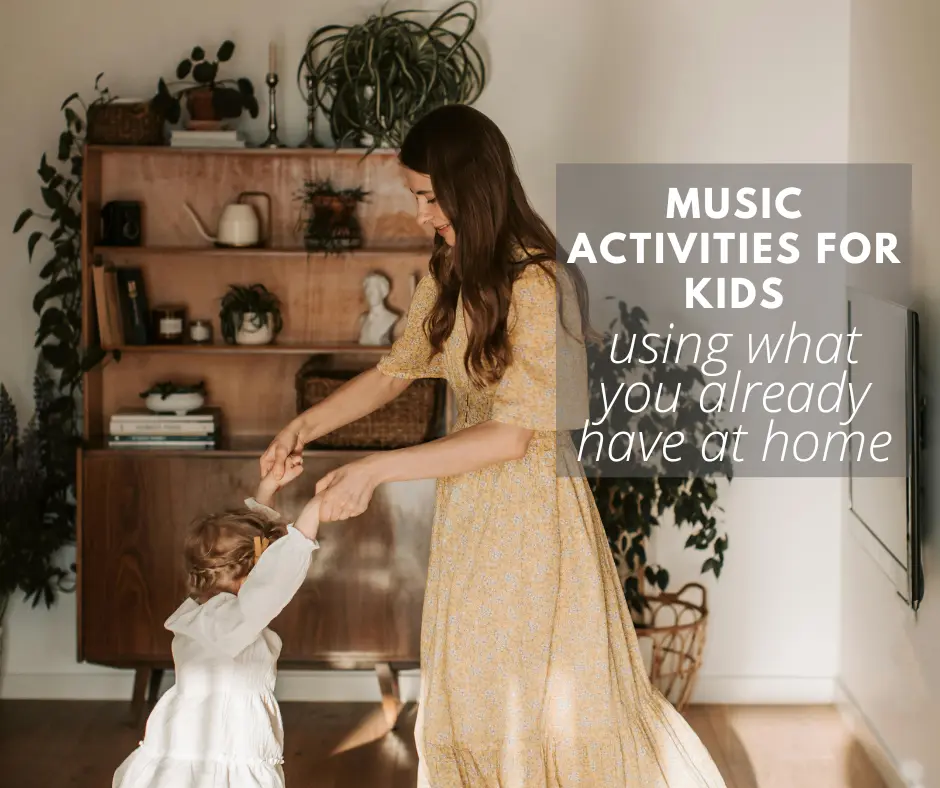
If the idea of music education makes you picture instruments you do not own, lessons you do not have time for, or skills you do not feel qualified to teach, take a beat! This post is for you.
Some of the most meaningful music learning for young children happens without instruments, without prep, and without you needing to know anything about music at all. When children regularly experience music through listening, singing, and movement, important learning is already taking place, even if it does not look like a formal lesson.
If you have hands, a voice, and a few everyday household items, you already have everything you need!
This guide is designed for busy parents, homeschool families, and educators who want simple music activities they can try right away. No pressure necessary.
First, What Counts as Music Education?
Music education for young children is not about reading music, mastering an instrument, or sitting still for long periods of time. At this age, music learning happens through listening, moving, exploring sound, and playing with rhythm. It happens through FUN!
Those everyday musical moments are quietly building coordination, listening skills, and confidence…important skills that support all kinds of learning!
Rhythm Using Hands and Feet
Your child’s body is their first instrument, and it is the best place to start. One of the simplest rhythm activities is sharing music together!
Share your favorite song with your child and then invite them to share theirs. Play both songs and listen together. As the music plays, clap, tap, or stomp along and see if you can find the steady beat. You may even find that you and your child or your student learn something about each other by sharing your favorite songs.
Some songs that can work especially well for finding rhythm:
- Yellow Submarine by The Beatles
- Three Little Birds by Bob Marley
- Happy by Pharrell Williams
- Can’t Stop the Feeling by Justin Timberlake
Vocabulary Moment: What Is a Steady Beat?
A simple way to explain steady beat to a child is this:
“The steady beat is the music’s heartbeat. It keeps going over and over, even when the song changes.”
You might also say, “It’s the part of the music you can clap along to,” and then show them instead of explaining more.
Music With Kitchen Items
Your kitchen is full of instruments waiting to be discovered!
Wooden spoons become rhythm sticks. Pots and pans become drums. Plastic containers filled with rice or beans become shakers.
Kitchen instrument play is especially fun when paired with music that has a strong, steady beat.
Try exploring sound with:
- We Will Rock You by Queen
- Waka Waka by Shakira
- The Lion Sleeps Tonight
- Down by the Bay
Give your child one “instrument” and keep one for yourself. Try playing loudly, then softly. Tap fast, then slow. Follow the music and see what happens.
Singing Without Feeling Awkward
Many parents worry they cannot sing well enough to teach music. Good news! Your child does not care. Your voice is their favorite sound.
Instead of focusing on how you sound, focus on songs that are easy and enjoyable to sing together.
Great options include:
- You Are My Sunshine
- Bingo
- Old MacDonald
- The Itsy Bitsy Spider
- If All the Raindrops
Sing slowly. Repeat the same songs often. Children learn music the same way they learn language, through hearing it again and again.
Movement Activities That Burn Energy and Build Skills
Music and movement naturally go together, especially for young children who need to move their bodies to learn.
Play music and invite your child to:
- March around the room
- Jump or hop
- Spin slowly
- Freeze when the music stops
Excellent movement friendly music includes:
- The Freeze Dance Song by The Kiboomers
- Head, Shoulders, Knees, and Toes
- The Ants Go Marching
- Hokey Pokey
For instrumental movement:
- William Tell Overture finale for fast running or galloping
- Radetzky March for marching and clapping
- The Nutcracker March for big, steady steps
Exploring Loud and Soft, Fast and Slow
Contrast is one of the most important musical ideas for young children, and it can be explored very simply.
For loud and soft:
- Sing If You’re Happy and You Know It very loudly, then in a whisper
- Shake a shaker loudly, then gently
- Listen to In the Hall of the Mountain King and notice how it slowly grows louder
For fast and slow:
- Move slowly like turtles to Gymnopédie No. 1 by Erik Satie
- Run or jump quickly to The Can Can by Offenbach
- Clap slowly to You Are My Sunshine, then quickly to The Ants Go Marching
You do not need to label these concepts unless your child asks. Feeling the difference is more than enough.
Listening Time That Actually Works
Listening to music counts as music education, especially when the same pieces are played regularly.
You do not need long playlists. Choose one or two pieces and return to them often.
Easy times to listen:
- During breakfast
- While coloring or building
- During quiet play
- Before bed
Preschool friendly listening favorites:
- Mozart Piano Sonata in C Major K. 545
- Saint Saens Carnival of the Animals
- Tchaikovsky The Nutcracker Suite
- Peter and the Wolf by Prokofiev
Music Built Into Daily Routines
Music can fit into routines you already have.
For clean up:
- The Clean Up Song
- Radetzky March or another short instrumental march
For bath time:
- Row Row Row Your Boat
- Rubber Duckie
For bedtime:
- Brahms Lullaby
- You Are My Sunshine sung slowly
These small rituals create consistency without adding anything extra to your day.
Learning About Music Through Real People
Children love learning that real people in their lives make music.
Call or FaceTime a family member or friend who plays an instrument, sings, or enjoys music. Let your child ask questions and listen to their story.
Fun, kid friendly questions include:
- What instrument do you play or do you like to sing?
- When did you start making music?
- Why do you enjoy it?
- Was it ever tricky to learn?
- What is your favorite song?
- Can you show me how you practice?
This helps children see music as something real and relational, not just something that happens in lessons.
How Much Music Is Enough?
Five to ten minutes at a time is enough.
A few times a week is enough.
Some weeks will have more music. Some will have less and that is perfectly okay!
When Extra Support Is Helpful
Some families love keeping music completely informal. Others appreciate a little guidance. Programs like My Music Workshop are designed to support parents without adding pressure. Lessons are play based, developmentally appropriate, and easy to repeat. Many families use the lessons as a gentle guide and then revisit these same songs and activities throughout the week. Eventually, you may decide you want to invest in some other instruments like a piano, keyboard, or drums. When you do, My Music Workshop can also help you and your child or student make that leap.
A Final Encouragement
You do not need more supplies. You do not need more time. You do not need more expertise.
If you are listening, singing, moving, and exploring sound together, you are giving your child a meaningful music education. Start small and keep it joyful. Use what you already have. That is more than enough.
Ready to start lessons at home?
Step-by-step video lessons for kids 4 to 12 with Mr. Elias, with play-alongs and picture quizzes. Each lesson takes about 10 to 15 minutes. From $10 a month.