Where Do I Start If I Want My Child to Learn an Instrument?
Quick answer
Start by identifying whether your child is already showing interest in music or whether learning an instrument is a value you want to introduce. If your child is drawn to a particular instrument, follow that curiosity through listening, exploration, books, live performances, and hands-on experiences before rushing into formal lessons. If your child has not shown a clear preference, create a home environment where music is a part of everyday life. Listen to different genres, sing together, explore child-friendly instruments, and notice what captures your child’s attention. When choosing lessons, consider age, attention span, fine motor development, and frustration tolerance. The goal is not to pressure your child into becoming a musician, but to give them meaningful opportunities to discover whether making music is something they enjoy.
Is My Child Already Showing Interest in Music?
There are two common reasons parents begin exploring music lessons.
The first is that your child is already expressing interest in music or seems especially drawn to a particular instrument. The second is that music is something you personally value, and you want to find a natural way to introduce it to your child. Both are wonderful starting points, but they may require slightly different approaches.
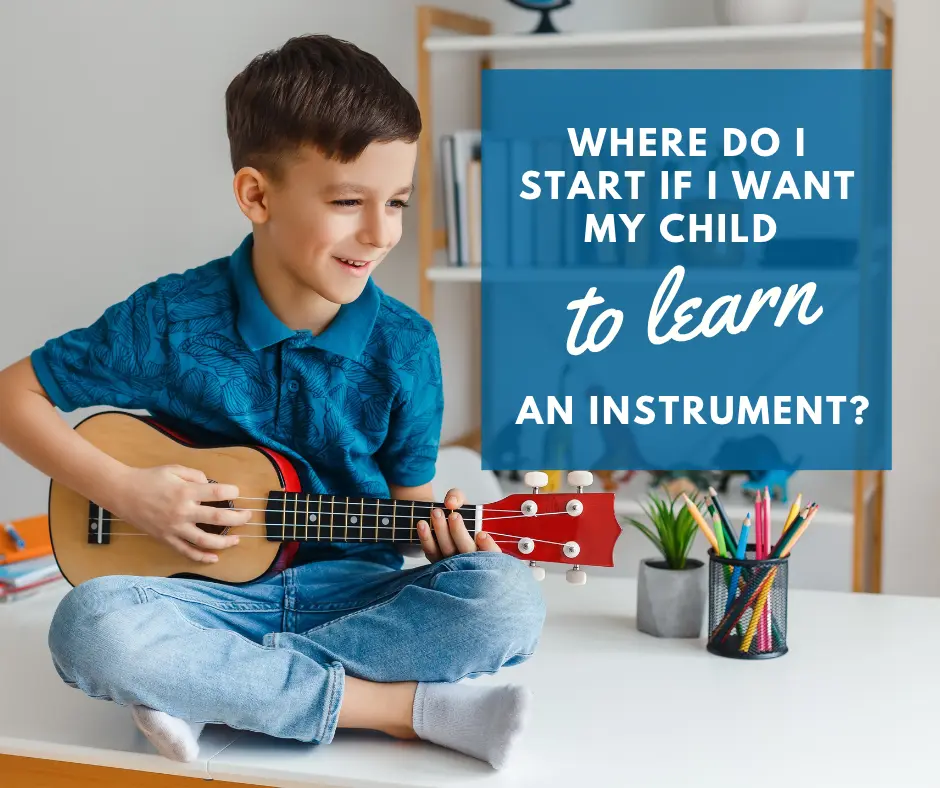
If your child is already showing interest, begin by paying attention to what specifically captures their attention. Some children come alive when they strum a guitar or ukulele. Others are fascinated by the piano keys and enjoy experimenting with different sounds. Some love the cause-and-effect experience of hitting a drum with a pair of sticks. Your first step is not necessarily to sign up for lessons. It is to notice what makes your child light up! That spark of interest can become an important source of motivation later, especially when learning becomes more challenging and requires patience, repetition, and concentration.
How Can I Explore an Instrument Before Starting Lessons?
Once you notice a child’s interest in an instrument, turn that interest into a small treasure hunt of learning together.
For example, if your child seems fascinated by the ukulele, you might:
- Listen to songs that feature the ukulele.
- Visit a music store and allow your child to carefully hold or strum one.
- Read books about instruments and musicians.
- Ask friends or family members whether they play ukulele.
- Attend a concert or community event where the instrument is featured.
- Watch a musician demonstrate different sounds and techniques.
- Explore a child-sized or beginner-friendly instrument at home.
These experiences help your child build familiarity and excitement without making the instrument feel like an assignment. You can take the same approach with piano, drums, guitar, violin, or singing. The goal is to widen your child’s exposure and give them opportunities to discover what they enjoy.
What If My Child Has Not Shown Interest in an Instrument?
If your child has not expressed a clear preference, you can begin by creating a home environment where music is naturally woven into your daily life. This does not require a formal curriculum, expensive equipment, or a parent who already knows how to play an instrument. Start with simple, accessible experiences.
Children’s books with musical components can be a wonderful entry point. For example, interactive books that allow children to press a button and hear a piece of music introduce both listening and cause and effect. A book featuring Antonio Vivaldi’s The Four Seasons can provide an approachable way to connect music with nature, storytelling, and the changing seasons.
You can also make listening to music a regular part of your family routine. Play music during breakfast, while preparing dinner, or during family meals. Let each family member take a turn choosing a song. If there is a type of music that you enjoy, share it with your child. You’d be surprised how your own enthusiasm can be contagious and spark your child’s interest as well. Just focus on enjoying music together,
How Can I Help My Child Discover Which Instrument They Like?
Exposure is especially important when a child has not yet developed a clear preference.
If possible, let your child see and hear several instruments in person. A music store, community concert, school performance, or music class can provide opportunities to observe how instruments look, sound, and feel.
You might ask simple questions such as:
- “What sound did you like?”
- “Which instrument would you like to try?”
- “Did you enjoy making that sound?”
- “Would you like to hear another instrument?”
Try to keep things low pressure. Your child does not need to choose immediately, and their preference may change over time. A child who is fascinated by piano at age four may become interested in drums or ukulele later. Sometimes their preferences may change and that is perfectly okay.
When Should My Child Begin Formal Music Lessons?
There is no single starting age that works for every child, but general age ranges can help parents know where to begin.
Many children can begin playful singing instruction around ages three or four. Piano lessons often become more practical around age five, while ukulele lessons may be a good fit around ages five or six. These are just general guidelines, not strict rules.
Readiness also depends on your child’s:
- Interest in the instrument
- Ability to participate in a short guided activity
- Attention span
- Ability to follow simple directions
- Fine motor development
- Communication skills
- Frustration tolerance
- Willingness to try again when something feels difficult
A child can explore a piano before age five or strum a ukulele as a toddler without being ready for structured lessons. Early exploration is valuable, even when formal instruction comes later.
How Can I Encourage Music Without Creating Pressure?
One of the most important things parents can do is create opportunities rather than expectations. There is a difference between inviting a child to explore music and making them feel responsible for fulfilling a parent’s musical dream. If you value music because of your own childhood experiences, it is worth remembering that your child may have a different relationship with it. If your child begins lessons, keep communication open. Ask what they enjoy, what feels difficult, and whether they feel connected to the music they are learning. Ultimately, the goal is to help your child develop a lasting relationship with music that is fun and rewarding.
Start by Opening Doors
If you want your child to learn an instrument, begin with curiosity rather than pressure. Notice what they already love, expose them to a variety of musical experiences, and make music a natural part of your life together. You do not have to turn your child into a virtuoso. You can simply give them a childhood filled with opportunities to sing, listen, experiment and discover. When the time is right, those experiences can make the transition into formal lessons feel less like a requirement and more like the next exciting step in a musical journey. Ready to explore music with your child? My Music Workshop offers engaging music education experiences designed to help children build confidence, creativity, and a lifelong love of music. Try a free 7-day trial and discover what sparks your child’s interest.
About the Author
Carole Crocco is a music educator with My Music Workshop. She has extensive experience teaching young children and helping families introduce music in fun, engaging, and developmentally appropriate ways. She is also a classically trained soprano and singer-songwriter.
Ready to start lessons at home?
Step-by-step video lessons for kids 4 to 12 with Mr. Elias, with play-alongs and picture quizzes. Each lesson takes about 10 to 15 minutes. From $10 a month.