Top Instruments for 5-Year-Olds: How to Choose the Perfect Starter Instrument

Quick answer updated November 2026
The best starter instruments for most 5-year-olds are a keyboard or piano, a ukulele, or drums. Piano shows how music works at a glance, the ukulele is small and light for little hands, and drums are a great fit for active kids who love rhythm. Your child is likely ready if they get excited about instruments and sing or hum along to songs they hear.
My Music Workshop video lessons start at age 4, with piano, drums, ukulele and singing all in one membership, so your 5-year-old can try more than one before you buy an instrument.
A New Year Means New Learning Adventures!
As the new year unfolds, why not introduce something fresh and exciting into your child’s life? If you’ve been wondering about which instrument is best for your 5-year-old (or a child in that age range), this is the perfect time to explore the world of music education. If you’re not a musician yourself, the process of choosing the right instrument might seem intimidating—but don’t worry! We’re here to guide you through the steps and help you make an informed, confident decision.
Before diving into specific instruments, let’s remind ourselves of a fundamental truth: music is a powerful investment in your child’s development. The research is clear—starting music education early has a wealth of benefits, from cognitive development to emotional regulation and enhanced creativity. And that’s just the beginning!
How Do You Know if Your 5-Year-Old is Ready for an Instrument?
Before picking the perfect starter instrument, it’s important to assess whether your child is ready for music lessons. There are several signs that may indicate it’s time for your 5-year-old to start learning an instrument:
- Interest in Music: Does your child show excitement when they encounter musical instruments in real life or in movies and shows? For example, are they fascinated by a friend or family member’s guitar, piano, or drum set? Do they point out instruments in stories or shows? These clues suggest that they’re ready to give music a try.
- “An Ear” for Music: Does your child hum or sing along to songs they hear, or can they remember and sing songs they’ve learned in school? This is a great indicator that they have a natural ear for music. If they can reproduce melodies or rhythms, they may be ready to start formal lessons.
- Dexterity and Fine Motor Skills: Can your child grip a crayon, use scissors, or perform simple tasks like eating with utensils or helping you with basic kitchen tasks? These skills are important for playing many instruments. If they show good dexterity, they may be ready to start learning an instrument. However, if they still need to develop fine motor skills, it might be best to wait a little longer or choose an instrument that is more forgiving.
Chances are, if you’re asking yourself whether your child is ready for music lessons, they probably are! Parents often know best when the time is right, and these signs can provide helpful confirmation.
Best Beginner Instruments for 5-Year-Olds
There are a few instruments that are especially well-suited for young beginners. Let’s take a look at the best options for 5-year-olds:
1. Keyboard or Piano
The piano is one of the best instruments for young children. It lays out the map of music quite literally—black and white keys make it easy to visually understand musical concepts like pitch and rhythm. Starting with piano can also lay a solid foundation for learning other instruments in the future.
- Benefits: Easy for beginners to understand; helps develop hand-eye coordination, listening skills, and a solid foundation in music theory.
- Noise Control: If you’re worried about the noise, an electric keyboard is a great option. Many come with headphone jacks, so your child can practice without disturbing the rest of the family.
- Cost: Keyboards range from $50 to $300+, depending on the model. Entry-level options are quite affordable and great for starting out.
2. Ukulele
The ukulele is another fantastic choice for young children. Smaller and lighter than a guitar, it’s much easier for little hands to hold and play. The chord structures are less complex than those of a guitar, making it a more manageable option for a beginner.
- Benefits: Small size, easy to play, and an excellent introduction to string instruments. It also helps build a foundation for learning other instruments, like the guitar or bass.
- Cost: Ukuleles typically range from $30 to $100, making them an affordable option for parents.
- Bonus: With just a few basic chords, your child will be able to play simple songs fairly quickly, which can boost their confidence and motivation.
3. Drums (Kid-Sized Drum Kit or Percussion Instruments)
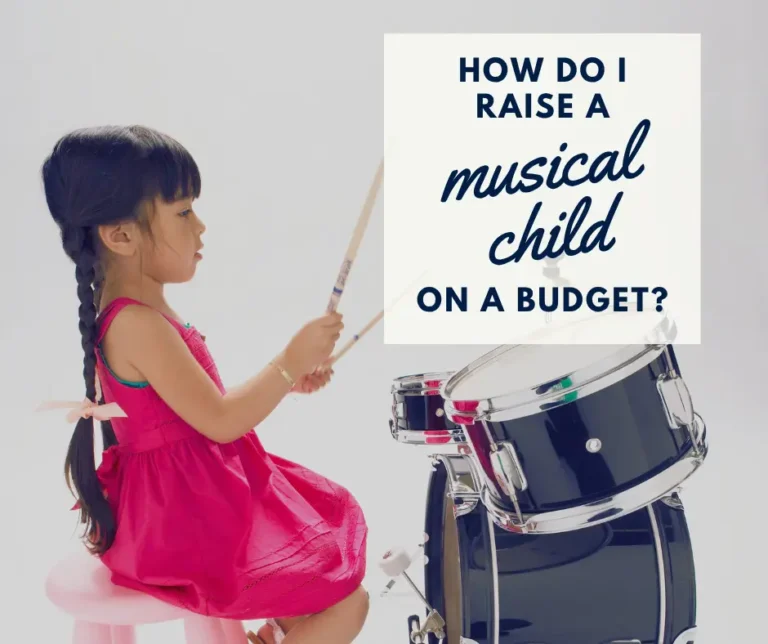
If your child has a lot of energy and loves rhythm, a kid-sized drum kit can be a great option. Drums help develop coordination between the hands and feet and help children internalize rhythms. They’re also a fantastic outlet for energy!
- Benefits: Excellent for developing rhythm, coordination, and physicality. Drumming is a fun, high-energy way to get kids involved in music.
- Considerations: Drums can be noisy, so be mindful of your living space. Look for quiet drum kits or percussion instruments like bongos or tambourines as alternatives.
- Cost: Small drum kits can range from $50 to $200. A basic set of percussion instruments (such as a tambourine or xylophone) can be found for $20 to $50.
Long-Term Success: Helping Your 5-Year-Old Stick with Music
Once you’ve chosen the perfect instrument, the key to long-term success is keeping your child motivated and engaged. Here are a few strategies to help:
- Set Small, Achievable Goals
Children thrive when they experience small wins. Encourage your child to practice for just five minutes per day—this will help them build a habit and avoid burnout. Over time, these small steps add up, and your child will begin to feel a sense of accomplishment. - Incorporate Music into Daily Routine
If you’re homeschooling, why not schedule music time as part of the school day? It can be a great way to start the day or wind down after a busy session of learning. - Create Meaningful Practice Opportunities
Encourage your child to see what they’re learning as a gift to others. Is there a grandparent or family friend who could use a pick-me-up? Have your child perform a song for them via FaceTime or Zoom. You’d be surprised how motivating it can be to practice music when it’s shared with others. - Make It Fun
Practice doesn’t have to feel like a chore! Incorporate music into games, create challenges, and offer positive reinforcement. Making it a fun, interactive activity will keep your child excited about learning.
Why Choose My Music Workshop for Your Child’s Music Education?
At My Music Workshop, we are passionate about making music education accessible, fun, and effective. Whether your child is starting with online ukulele lessons, piano lessons, drum lessons, or singing lessons, we offer a range of exciting programs that will engage your child and help them build foundational music skills.
Our 7-day free trial gives you the opportunity to test out our lessons and see if they’re the right fit for your child. Our approach combines the joy of music with essential music theory, helping kids become better musicians and better learners.
If you’re ready to introduce your child to the wonderful world of music, My Music Workshop is here to help guide you every step of the way.
Conclusion
Choosing the best instrument for your 5-year-old doesn’t have to be overwhelming. By considering factors like size, ease of play, and your child’s natural interests, you can make a decision that will foster a lifelong love of music. Whether it’s the piano, ukulele, or drums, starting music at a young age offers incredible benefits, from cognitive development to emotional growth.
Remember: Small, consistent steps will help your child build skills and confidence over time. And with the right resources, your child can start their music education journey today! Ready to take the next step? Start with a 7-day free trial at My Music Workshop and see the magic of music unfold!
Ready to start lessons at home?
Step-by-step video lessons for kids 4 to 12 with Mr. Elias, with play-alongs and picture quizzes. Each lesson takes about 10 to 15 minutes. From $10 a month.