Music Lessons for Kids: 23 Questions Parents Ask, Answered
Hi, I’m Elias. My wife, Lianna, and I started My Music Workshop in 2009. In that time we’ve met a lot of parents and taught quite a few students. We’ve gotten a ton of questions over those years and, not surprisingly, we hear a lot of the same questions again and again. These are the questions parents ask us most, with straight answers. Lianna and I love music and there are many great ways for kids to start learning. Whatever method you choose, whether it be an in-person teacher or a program like ours at My Music Workshop, we hope these answers help and get your kids one step closer to learning to play an instrument.
Try 7 days free See how a lesson works
Getting started
What is the best age to start music lessons?
Short answer: Most kids are ready around 4 or 5 for short lessons built for kids. Before that, sing, clap and play simple instruments together at home.
Most kids are ready for short, simple music lessons around age 4 or 5, and many piano teachers prefer to start private lessons around 6 or 7. Before that, singing, clapping, moving to music at home and using simple instruments like shakers or bells is the best start. At 4 or 5, look for lessons that are relatively short (10-15 mins max) and built for kids. Ultimately, you know your kids best and you know if they’re ready to sit and learn for a few minutes and will do a bit of playing and practicing afterwards. When they’re young it doesn’t need to be much, but getting them started early can be a huge boost for their musical ability later as they keep learning. Of course, sticking with it is key. Our lessons are built for kids about 4 to 12, and we have lots that are made for young learners that hit the things I mentioned above: short, understandable and meant to build their confidence through quick wins and successes.
Which instrument should my child learn first?
Short answer: Piano is a great first instrument for most kids. Drums suit kids who tap on everything, and ukulele is a good gateway to guitar. The best first instrument is the one your child is excited about.
Piano is a great first instrument for most kids, because every note is laid out in a row they can see. Piano is both melodic and rhythmic and doesn’t require a ton of finger strength or coordination like a guitar or other string instrument. Pick drums for a high-energy child who taps on everything, and for those kids that you just know are meant to play drums (I have one of those). Pick ukulele if they are drawn to it, but it takes a bit of finger strength to play even a few simple chords. It is a great gateway to other string instruments like guitar and even violin. Singing needs no instrument at all. Honestly, the best first instrument is the one your child is excited about. Hold off on wind or brass instruments and orchestral strings like violin until they’re a bit older, usually at least around 8. Your future first-chair violin player is likely to have the most success if they start learning at about 8 or 9. It’s always great to let them try a few different instruments to know what they’re most drawn to before starting. And, it’s good to know that they can change their mind about an instrument even after starting. That’s OK, but also be aware of whether they’re usually quick to change their mind about things, and whether it’s better to stay the course or if they genuinely want to play something else.
Learn more: Piano lessons for kids · Drum lessons for kids
How do I introduce my child to music when they’re young?
Short answer: Play music around your kids often, talk about how it sounds and feels, make music with them, and keep a few inexpensive instruments where they can grab them.
I love this question because I was raised in a household that loved music. The best thing you can do is play music around your kids a lot. Talk about it. Help them hear things in the music like a guitar or drums. Help them connect music and emotion by asking how certain songs or pieces make them feel. “Doesn’t this song sound happy?” “Wow, this sounds sad, or scary…” Things like that help them get more deeply connected to music. If you’re willing, I suggest you participate with them in making music, even if you’re not a musician yourself. Sing together, clap to the beat of songs you already like, play pots and pans as drums. Make music feel approachable and fun, and they’ll catch on. Lastly, I recommend you get a few inexpensive instruments and keep them around the house: a ukulele, small drum, keyboard, some shakers, etc. They won’t cost an arm and a leg, and if your kids can pick them up and play them whenever they feel like it, it encourages them to make music from an early age. That will help lead them to wanting to keep learning later.
Is ukulele a good first step before guitar?
Short answer: Yes, for most young kids. A ukulele is small and inexpensive, and its chords are simpler to play than guitar chords.
Yes, for most young kids. A ukulele is small, has four soft nylon strings and uses simple chord shapes, so kids strum real songs quickly and don’t get sore fingers. Many of those skills carry over when they move to guitar later. Ukes aren’t too expensive either, and playing chords is easier on a ukulele than a guitar.
Learn more: Ukulele lessons for kids
What age should kids start drum lessons?
Short answer: Kids can start at 4 or 5 with one drum or a practice pad, then move to a drum set around 5 or 6.
Many kids can start drums at 4 or 5. Younger kids can start with just one drum (or even a practice pad) and learning patterns. We start this way at My Music Workshop. Our single drum lessons are color-coded and get younger kids learning and playing patterns while learning the basics of reading music. I recommend they start the drum set at 5 or 6. Even younger children can learn a few simple beats on a full kit, and trust me when I say they will love playing those beats! My students and my own son are proof of that.
Learn more: Drum lessons for kids
Do we need to buy an instrument right away?
Short answer: Yes, but it doesn’t need to be fancy. A basic keyboard, a single drum, practice pad or electronic kit, or a beginner ukulele is enough to start. Upgrade later.
Yes, you’ll need some kind of instrument to get your child started. But, it doesn’t need to be fancy or expensive (you can upgrade later). For drums, you can start with a single drum, practice pad or simple kit. There are quite a few electronic kits available today that are decent. They won’t be the best way to learn forever, but they can be a good entry point for beginning drummers. They’re quiet and work really well with online lessons. Again, upgrade to an acoustic kit or better e-kit later, as they get older and progress. For piano, a basic keyboard is enough to begin. Full-size, weighted keys are best for learning proper technique, but not crucial to get started if you have a keyboard already or are looking for a budget-friendly way to get your kids an instrument. For ukulele, a simple beginner ukulele is fine. Read the reviews (as we all do now) and find something in your budget with good reviews. Amazon and Sweetwater are good options for purchasing an instrument online. And your local music store is also great if they have a decent selection. Support small local business when you can! Buy better gear once your child is playing every week.
Practice and progress
How long should my child practice music each day?
Short answer: Short and often works best: about 5 to 10 minutes for ages 4 to 6, 15 to 20 for ages 7 to 9, and 20 to 30 for ages 10 to 12, several times a week.
Short and often beats long and rare. As a rough guide: ages 4 to 6, about 5 to 10 minutes, three to four times a week; ages 7 to 9, about 15-20 minutes, 3-5 times per week; ages 10 to 12, about 20-30 minutes, 3+ times per week. Five days a week of 10 minutes does more than one hour on Saturday. Stop while your child still wants to keep going, so they come back tomorrow. The goal is to get them to want to practice themselves. It took my son, who’s now 13, years of encouragement, but now he plays three instruments (guitar, drums and violin), and he plays each one of them on his own without us having to remind him. Well, not violin unfortunately. He plays at school but doesn’t love practicing violin at home. I’m super glad he has the chance to play at school and still practices there about 4 times per week. Guitar and drums he plays at home without us ever having to ask. In fact, we have to ask him to stop sometimes when it’s way past bedtime. As a music teacher and musician I never want him to stop. But on school nights, sleep is important too. 🙂
How do I get my child to practice without a fight?
Short answer: Tie practice to something that already happens every day, keep it short, encourage without pushing, and keep instruments out and ready to play.
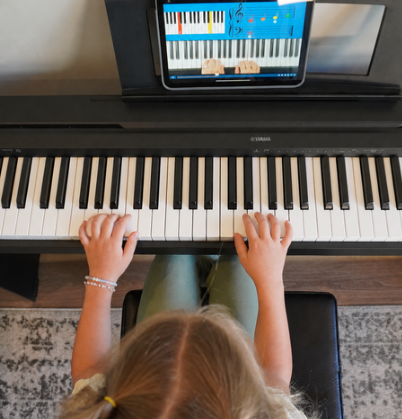
For newer musicians and kids who don’t love practicing on their own, tie practice to something that already happens every day, like right after dinner or before watching a movie. Keep it short, sit nearby for young kids, and encourage them without being pushy. “You sound great!” “I love hearing you play.” “I’m so proud of the effort you’re putting in.” “Will you play something for me? I love what you played the other day and want to hear it again.” These are the types of things that can be really helpful. My eight year old plays piano. She loves it. But, she doesn’t always go to the piano to practice on her own. Thankfully, she loves learning with our My Music Workshop lessons, so when I hand her my iPad and get her logged in she’s usually ready to learn and play. I also keep the piano set up and ready to play in our house. So it’s as easy as sitting down and turning on the power. Don’t underestimate the power of keeping instruments out and easy to play. I can’t stress this enough. Make it easy for your kids to play whenever they want to. Keep encouraging, helping them to remember and motivating them, and with your help they can, and likely will, stick with learning.
How do I know if music lessons are working for my child?
Short answer: If your child sticks with lessons and practices a few days a week, you’ll hear them getting better and see them more drawn to music.
If they are consistent with their lessons and practice at least a few days a week, they will progress. You should hear them getting better. Sometimes quickly and sometimes more slowly. Both are fine. Kids who learn and practice music tend to be more drawn to music in other places too. They’ll hear things in music they didn’t before. They’ll start changing their music taste or their favorite songs. They’ll ask you to play certain music. And they’ll (hopefully) want to show you what they learned. Even parents who don’t have much musical experience will hear the small improvement their kids make. Luckily, we love our kids, so even the noisy practice they do, particularly those drummers, is music to our ears. Keep them encouraged to play and practice, and you’ll hear the progress happening. Slow but sure wins the musical race. And, there’s no finish line (boy, do I know that). Whenever I think I’m playing well, I feel like I have so much to still learn. That’s what makes music incredible: it’s a lifelong relationship with a creative outlet.
My child wants to quit. Should I let them?
Short answer: It depends on why. Find the reason first (too many activities, a program or teacher that isn’t a fit, or an instrument they’ve outgrown), because the payoff of sticking with music can last a lifetime.
My advice: it really depends. This is where you have to use judgement. They might want to stop learning music for a number of different reasons. Maybe they’re in a lot of other activities and are feeling drained. Maybe (and hopefully this is not the case) they don’t connect well with their teacher or the program they are learning music with. Maybe they are still playing a beginner instrument though they’ve progressed and are ready for something better. This makes playing feel not as enriching and fun. I’ll say this: don’t compare music to sports or activities like dance or martial arts. Frankly, music can be harder to stick with at times, because it does take effort to keep moving forward. It’s not always fun to practice (though a lot of the time it actually is). But in my opinion, the payoff for sticking with music is greater than with most other things. People usually stop playing sports as teens, or early adulthood if they’re a great athlete. But, music can be with a person for their whole life. The journey is the destination. Sorry for getting philosophical. 🙂
Teaching music at home
Can I teach my child music if I’m not musical?
Short answer: Yes. Your job isn’t to teach music. It’s to find good lessons, help with a routine and encourage your child to stick with it.
Yes, kind of. You can be a musical facilitator and advocate. Your job as a parent isn’t to teach music; it’s to find them good lessons (here’s where I shamelessly pitch My Music Workshop. It’s free to try, so you can let your kids decide if they love learning with us), then encourage them to stick with it. You can also keep up with what your kids are learning, whether it’s with us or not. Help your kids create a good learning and practice routine, help them remember to practice and if you can, sit with them either while they learn or some of the time when they practice. You can also look over their recent lessons, help them stay on track, encourage them to practice. You are the support and a good program or good teacher will be the guide. Who knows? You may even pick up a few things yourself.
How can my child learn music at home?
Short answer: Choose a good online program or a private teacher who comes to your home, then set a regular time and help your child get started each session.
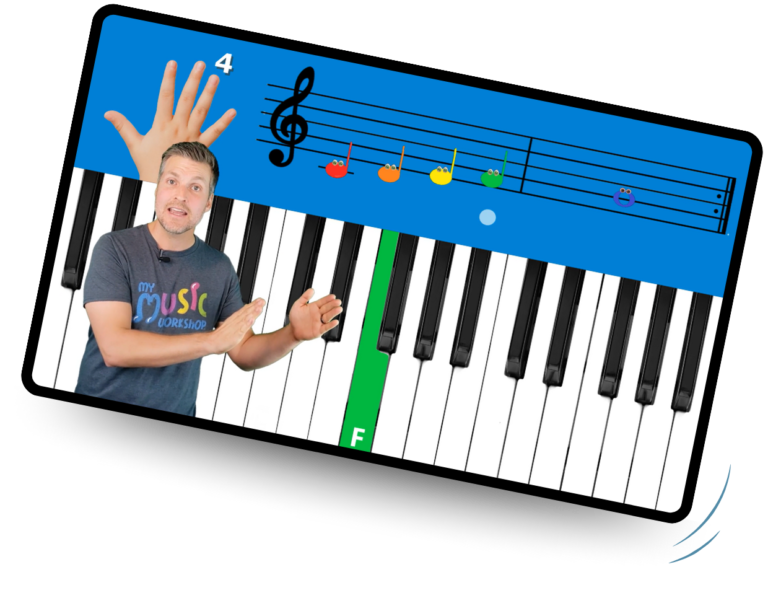
You have two realistic options for learning from home. First is a program like ours, online, like My Music Workshop. There are others of course, just find a good one. And, there are private teachers who will come to your home. You have to decide what is in your budget and your schedule. If you choose a private teacher, look for someone with experience teaching kids and keeping students. A roster of kids who are long time students says a lot about a teacher. If you choose an online program, set a regular time, and use lessons that build one small skill at a time with songs your child knows. Help them get logged in and set up for their learning session. Do this regularly and they’re likely to be successful. By the way, each My Music Workshop lesson is structured to be about 10 to 15 minutes: a lesson, a practice jam-along with real music (that can be repeated as much as they want), then a quiz with instant feedback. We also provide learning activities, like a piano chord builder and chord quiz game that kids (including my daughter) love using.
Learn more: Piano lessons for kids · Drum lessons for kids
How can parents support a child learning music?
Short answer: Get them started, help them build a routine, show interest, keep their instrument out and celebrate every win.
First get them started. That’s half the battle. Then help them create a routine, support their learning, show an interest, keep their instrument out and accessible, listen to music with your kids, take them to see live music when possible, play their favorite songs, ask them about music and what they’re learning, tell them how amazing they sound (at least this is always honest, because if you’re like me, any sound that comes from an instrument one of my kids is playing sounds great to me!). Celebrate all the wins: a practice session completed, learning a part of a song or a full song. Making up their own little thing on their instrument is a big one. Kids love doing that, and they should, it’s awesome!
Cost and online lessons
How much do music lessons for kids cost?
Short answer: In-person teachers in larger cities and suburbs often charge about $30 to $40 for a 30-minute lesson. Online programs cost much less per month.
In most of the US, a weekly 30-minute private lesson runs about $75 to $250 a month in 2026, depending on your city and the teacher (2026 price guide). Add books or learning materials and an instrument on top. Online video programs cost much less per month, and group classes usually fall in between. I’ve found that most in-person teachers in larger cities or suburbs charge between $30-$40 for a 30 min lesson and around $50-$60 for an hour lesson. At the time of writing this, My Music Workshop has a monthly plan for $16/month and a yearly plan for $120/year. Each comes with full access to three instruments plus singing, games, quizzes, practice, worksheets and more.
Are online music lessons good for kids?
Short answer: Yes, when the program is good and keeps kids engaged. Online lessons are also the most affordable and flexible option for busy families.
The straight answer is yes, but it also depends on the child. Each person learns differently. If the program is good and sticks to the fundamentals, the right learning progression and the right pace, and keeps kids engaged, then yes. There are also online lessons with a live teacher and they can be good too. But again the teacher has to be the one who not only teaches but also keeps the kids engaged. Sometimes, that is the more difficult part than teaching the instrument. Online lessons are also the most accessible and affordable option. And, for many families, especially in these expensive times, that can be an amazing option that helps families start their kids now instead of waiting for room in their budget to open up. With a good online program, your kids can also practice along with the program. There’s music to play along to and a demonstration in real time of exactly what they should be doing. Even the best teachers are only with their students for an hour per week at most. A lot can get done in that hour, but practice at home is usually left to the child (with the parents’ help). This is usually with a book or printed materials, which at times aren’t as engaging as an online practice song with the built in demo. Families are also busier than ever. Trust me, I know how many miles a week we log getting my kids to their activities, school, and everything else, and it’s a lot. The convenience of learning on your schedule in quicker bursts can be priceless when you’re busy, and might be your only option to learn music.
Are online piano lessons effective for young kids?
Short answer: Yes. Young kids do well with a good online program when lessons are timed right, build confidence and keep them engaged.
Yes. Again, it comes down to the child, but in my experience younger kids can do great with a good online program. When the lessons are timed right for kids, encourage them by making them feel successful, keep them motivated and have an engaging teaching style, kids stay focused and want to keep learning. Young kids learn best in small steps they can repeat.
Learn more: Piano lessons for kids
Benefits, talent and reading music
What are the benefits of learning music for kids?
Short answer: Learning music has been linked to better focus, self-esteem, motor skills, social skills and school performance, and it gives kids a creative outlet.
Research supports that learning music boosts test scores, increases self-esteem, improves grades, enhances focus, develops motor skills, gives children better social skills and, of course, is a wonderful creative outlet (something we all agree is important). It’s settled, parents: get your kids learning music as soon as you can!
Is music a talent or a skill?
Short answer: Mostly a skill. Some people are born with musical gifts, but just about anyone can learn to be musical.
Mostly a skill. The difference is whether someone is born with music ability or if it’s learned. Of course, people are blessed with unique talents, some of those are musical. But just about anyone can learn to be musical, no matter what abilities they start with. The wonderful thing is that music is so broad that everyone fits in and everyone is welcome. Whether someone loves to sing, tap on things, is drawn to a piano or other instrument, whether they have good rhythm, a strong ability to remember melody, a mathematical mind, a more art-focused mind, music has a place for every child and every person. So, come one, come all!
When should kids learn to read music?
Short answer: As soon as possible, a little at a time, along with learning to play by ear. If reading keeps a child from enjoying playing, go lightly.
As soon as possible. Reading music is not required to play an instrument but it is very helpful. Sight reading uses a different part of the brain than playing by ear, and the best way to learn is to develop both reading and the ability to play by ear. Just like younger children learn to read language by recognizing letters, then words, then sentences, proper grammar and so on, learning to read music works in a similar way. Kids start with the basics then develop their ability as they learn and grow. Before they know it they’ll be looking at sheet music and playing it right off the page. But, even if they don’t, that’s OK too. If reading music keeps kids from enjoying playing, it should be treated lightly and not as a hard requirement. Many of the most talented musicians cannot and do not sight read.
Can my child learn more than one instrument at a time?
Short answer: Yes, but most beginners do best focusing on one main instrument for the first few months while trying others for fun.
Yes, many kids enjoy doing that, and skills like rhythm, ear training and reading carry over. For a brand-new beginner, though, it’s best to focus on one instrument for the first few months; it usually builds confidence faster. But no matter what instrument they’re learning, they should be encouraged to try others, test, play and jam on as many other instruments as they want to. The very ambitious kids who can’t get enough music can, in some cases, study and learn to play more than one instrument at the same time. My son, Jay, has been learning to play a few instruments at the same time since he was young, and now he is proficient at them all (guitar, drums and violin). But, he was drawn to learning, so we didn’t hold him back.
Homeschool music
How do I add music to our homeschool routine?
Short answer: Give music a fixed slot two to five times a week, keep sessions short, and include singing, rhythm and listening, not only an instrument.
Give it a fixed slot, two to five times a week, the same as math or reading. Short sessions work best for young kids, and consistency matters. There’s a lot you can do with music in your homeschool routine too. Learning an instrument is of course fantastic, but there are so many other aspects to music that kids can learn with no instrument. Singing, rhythm, ear training, melody, reading music (by clapping rhythms), emotions in music, song structure and musical dynamics are just a few. If you don’t want to plan it yourself, our Pre-Planned Lessons are a 52-week course, one lesson a week, with worksheets and quizzes ready to go.
Learn more: Our homeschool music curriculum
Can I teach several kids music with one program?
Short answer: Yes. Siblings can learn together or each pick their own instrument, and at My Music Workshop each child can have their own profile.
Yes. Siblings can learn the same instrument together or each pick their own. At My Music Workshop, each child can get their own profile, so their progress and rewards stay separate. Each extra child is added for a small extra fee.
How can I tell what my homeschooler has learned in music?
Short answer: Keep a progress log with short videos of your child playing, and check in weekly or monthly.
Video records are a great tool. Keeping a progress log with video examples can be a great way to not only track on paper, but see and hear their progression. Use weekly or monthly check-ins, and of course whatever your state requires to meet and fulfill requirements. Inside My Music Workshop, the Parents Area shows lessons, quizzes and time for each child over the last 7 days, 30 days and overall, which is helpful to many families for tracking their time spent and progress.
Ready to try lessons at home?
My Music Workshop has hundreds of lessons for kids about 4 to 12. Piano, drums, ukulele, singing and reading music are all included in one membership. Kids play along with a band, complete quizzes with real-time feedback and earn Rock Star rewards that they can use inside the program to build their own music world.
Ready to start lessons at home?
Step-by-step video lessons for kids 4 to 12 with Mr. Elias, with play-alongs and picture quizzes. Each lesson takes about 10 to 15 minutes. From $10 a month.