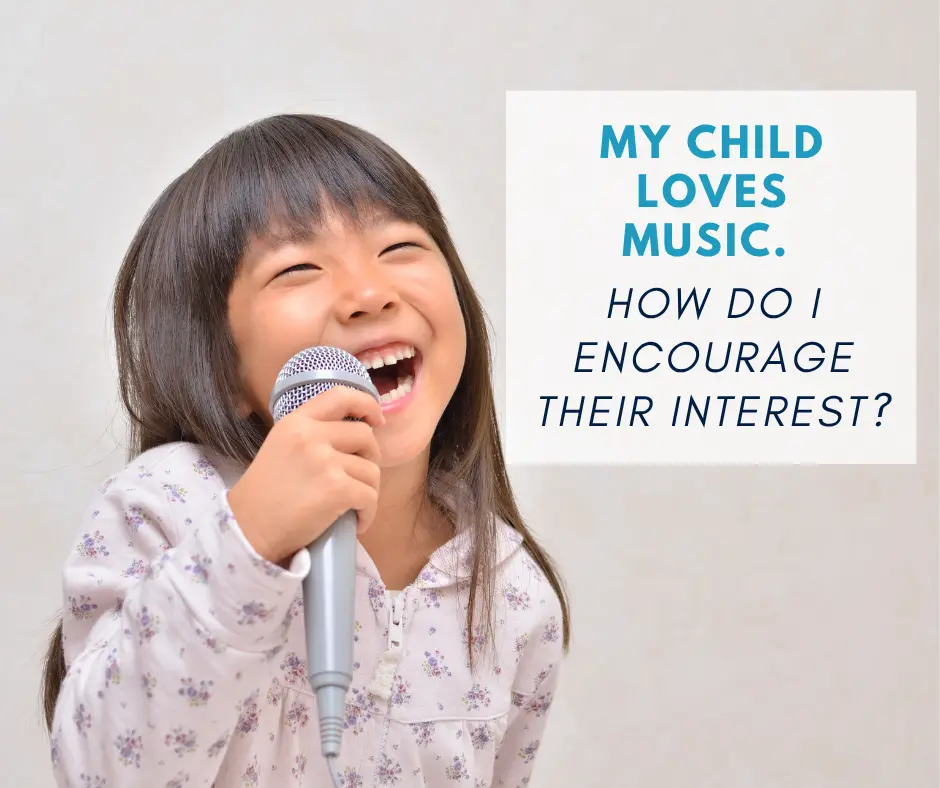
My Child Loves Music. How Can I Encourage Their Interest?
Quick answer
If your child already loves music, you do not need to turn that interest into a formal curriculum. Give them plenty of opportunities to sing, dance, listen, make up songs, explore instruments, and experience music with other people. Follow their curiosity rather than worrying about whether they are “talented” enough. As they grow, you can introduce music classes or formal lessons when they are ready for more structure. The goal is to help your child develop a joyful relationship with music that can grow with them as they grow and mature.
What are some signs that my child is naturally interested in music?
Children show musical curiosity in all kinds of ways. Your child might sing constantly, make up silly songs, remember melodies after hearing them once or twice, dance whenever music comes on, tap along to a beat, or become fascinated by musical instruments. They don’t need to check all of those boxes in order to encourage their music learning! Even one of those is a great indicator that they are interested in music. Even if you aren’t particularly musical yourself, the best thing you can do is pay close attention to what your child is enjoying. Do they seem drawn to stringed instruments like guitar or ukulele? Do they enjoy exploring the different sounds on a keyboard? Take mental note of what your child is drawn to and then find ways to maximize their exposure to those instruments.
Do I need to be a musician to encourage my child’s love of music?
You do not need to have an extensive musical background to help your child learn music effectively. Don’t worry about whether or not you can read music. The best way to encourage your child is to provide them with experiences that deepen their interest. Think simple. Play a classical music station while you eat breakfast or dinner (highly recommend classical KUSC!). Think through your social network of friends and family. Is there anyone that you know who plays an instrument that could show your child some of their musical knowledge or the instruments that they have? Play music that is based on your child’s favorite musical instrument. If they like guitar or ukulele, look up guitar or ukulele music on youtube. Watch musical movies together like The Sound of Music, Oklahoma, Singing in the Rain, or Disney’s Fantasia. Mr. Rogers has some fantastic episodes written around exploring musical themes too! There are so many easy access points to expand a child’s musical knowledge that are low hanging fruit for parents!
What can I do at home to encourage musical creativity?
You do not need a complicated music curriculum. Try giving your child opportunities to actively make music rather than passively consume it.
Here are a few easy ideas:
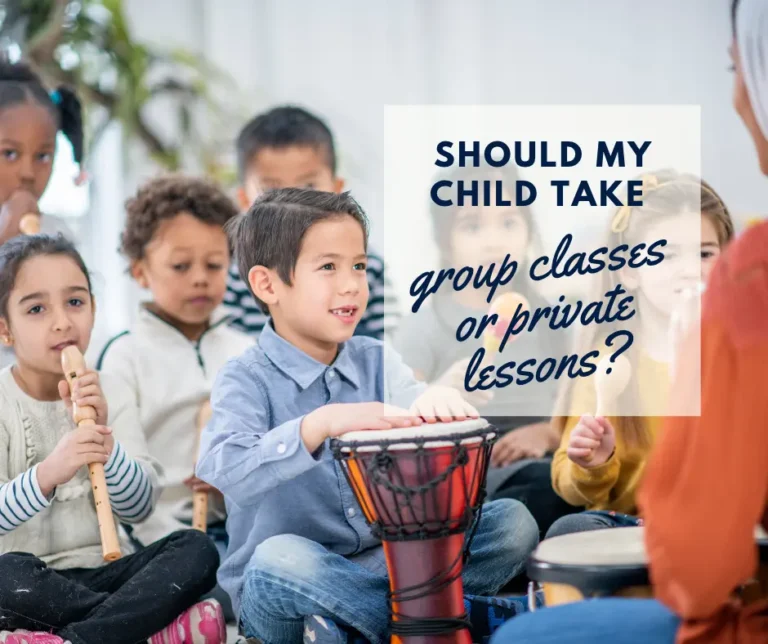
Make a music basket or box. You can purchase an assortment of fun instruments on Amazon or look at thrift stores for second hand ones. Think bongos, maracas, castanets, toy microphones, a kalimba, kazoos, bells, finger cymbals, xylophones, and rain sticks. Percussion instruments are great becuase they give a child an immediate sense of musical satisfaction through striking, shaking, or tapping.
Make a favorite songs playlist together. Keep tabs of what songs make your child come alive. Is it a Sesame Street song? An old motown song? Add your favorite songs to the list so you can share your own favorites with your kiddo. You might be surprised about what conversations come out of making a playlist together.
Go see some kind of live music together. Google “concerts in the park” or “free local music events” if you are on a budget. Local community colleges and universities often have winter and spring concerts that feature orchestras, choirs or jazz ensembles. Never underestimate the power of your child having a live music experience. Live concerts can really leave a lasting impression on kids and expand their musical horizons. It helps them to see what is possible when people dedicate themselves to learning an instrument.
What if my child doesn’t want me to sing or play with them?
Try not to take it personally. Young children can be very particular about how they want to experience their interests. If your child pushes your hands away from the piano or tells you not to sing, they may simply want to explore independently. This gives you the opportunity to become their audience; someone they can give their musical creations to. There is a fine balance between being involved in your child’s musical interest and stepping back to let them figure things out on their own. Try to stay neutral in these moments and just observe what your child is into!
When should I consider music lessons?
There is no need to rush formal lessons simply because your child loves music. A three year old can have a wonderful musical life without sitting down for traditional instrument instruction. Singing, movement, listening, and musical play are all valuable ways to develop musical awareness. As children grow, though, formal lessons can give them something that informal exploration cannot. A good teacher and solid curriculum can introduce technique, musical vocabulary, reading skills, and age appropriate challenges while helping a child build confidence in themselves. The instrument that your child is interested in is important too. Some basic frameworks:
Piano: Age 5 and up
Ukulele: Age 5 and up
Drums: Ages 3 or 4 and up
Singing: Ages 3 or 4 and up
What if my child seems more interested in creating music than learning it?
Encourage that. A child who makes up melodies, changes lyrics, experiments on an instrument, or figures out songs by ear is already doing something really special. We sometimes think music education means learning to reproduce something exactly as a teacher demonstrates it. But creativity is a really, really important part of being a musician too. There is a time and place for learning technique and developing accuracy. If your child invents a silly song about the family dog, you do not need to worry whether it is musically correct. Just know this is a great precursor for future musical endeavors because when imagination and solid technique finally come together, that is where really exciting musical artistry can come from.
How do I encourage my child without putting too much pressure on them?
This is when small, micro steps can be a useful framework. Let’s look at an example. Say that your child is learning piano. It is reasonable to ask them for 10 minutes of practice each day. It doesn’t matter how productive the practice session is, it’s really about just building up healthy habits. Celebrate their progress and engagement with their chosen instrument and leave it at that. Later on when they hopefully want to get involved with choir or band, they can apply themselves more and experience being accountable to other people which can definitely be a healthy source of pressure because collaborating with other musicians is very much a team sport.
FAQ
Does my child need musical talent to start music lessons?
No. Children develop musical skills through exposure, practice, instruction, and experience. A natural interest in music is a wonderful starting point, but children do not need to demonstrate exceptional talent.
What instruments are good for young children?
Simple percussion instruments, xylophones, keyboards, and ukuleles can all provide opportunities for musical exploration. The best choice depends on the child’s age, interests, and developmental readiness. Drums, piano, keyboard, and ukulele are better suited for slightly older kiddos right around ages 4 and 5.
How can I encourage music if I don’t play an instrument?
Listen to music together, sing, dance, clap rhythms, explore simple instruments, attend performances, and show genuine interest in what your child comes up with.
Let their curiosity lead the way
When your child makes up a silly song at the dinner table, remembers a melody they heard yesterday, or dances around the living room when their favorite song comes on, you do not have to immediately figure out what it means. Just take a mental note of it! Keep becoming a student of your child and collect data for future musical education decisions and investments. Give them opportunities to explore. Let them hear lots of different music so you can learn where there interests truly lie. Therein lies the key: when they finally tap into what they really enjoy, they can harness their intrinsic motivation to pursue the practice of an instrument further.
Ready to nurture your child’s love of music?
At My Music Workshop, we believe children learn best when music is fun, upbeat, and developmentally appropriate. We offer online piano lessons, drum lessons, ukulele lessons, and singing lessons. Our online music lessons are fun and interactive and help your child become proficient in foundational musical skills. Try a free 7 day trial and see where your child’s curiosity takes them.
About the Author
Carole Crocco is a music educator with My Music Workshop who has extensive experience teaching young children and helping families introduce music in fun and developmentally appropriate ways. She is also a classically trained soprano and singer songwriter.
Ready to start lessons at home?
Step-by-step video lessons for kids 4 to 12 with Mr. Elias, with play-alongs and picture quizzes. Each lesson takes about 10 to 15 minutes. From $10 a month.