Can Kids Really Learn Music Online? A Parent’s Guide
Quick answer
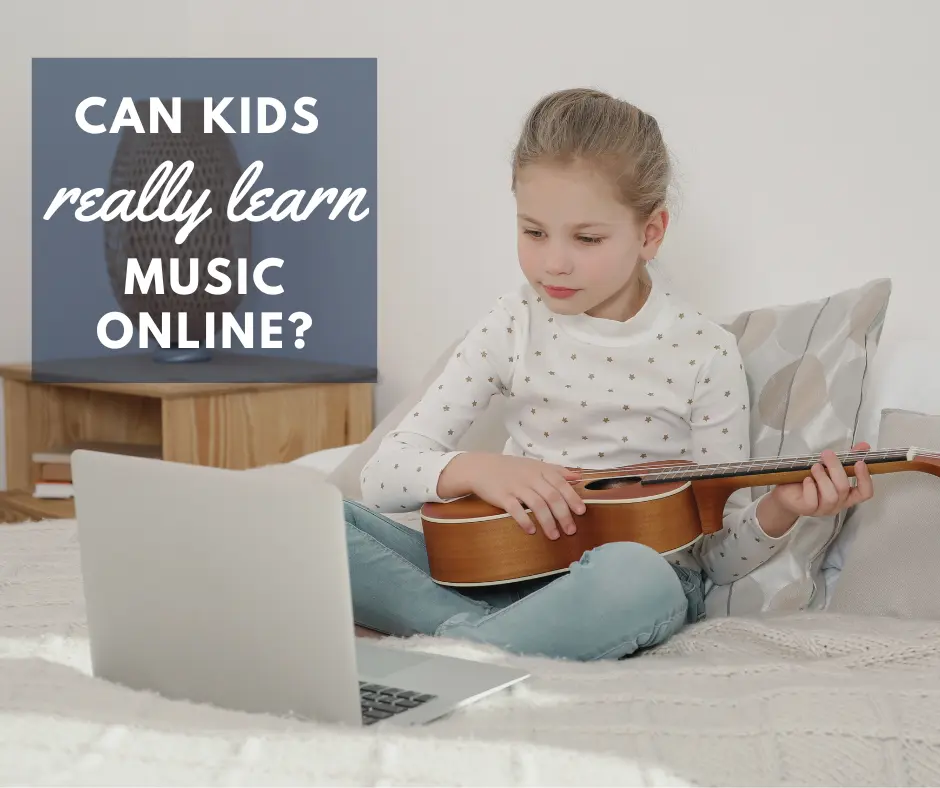
Can kids really learn music online?
Yes! Kids can successfully learn music online, especially when lessons are designed specifically for beginners. Online music programs can teach foundational skills like rhythm, pitch, and coordination through engaging, step-by-step instruction. For many families, online lessons offer a flexible, effective, and low-pressure way for children to start learning an instrument.
Introduction
If you’ve been considering music lessons for your child, you’ve probably come across online options and maybe wondered if they actually work.
It’s a fair question.
Many parents grew up thinking music lessons had to happen in person: sitting next to a teacher, following sheet music, and practicing between weekly sessions. So the idea of learning music online can feel unfamiliar because it’s different to what many of us are used to.
At the same time, online learning has become more common in many areas of education as technology has continued to evolve. From reading programs to math support, families are finding flexible ways to help their children learn at home.
So where does music fit into all of this?
The truth is that online music lessons can absolutely be highly effective for kids, especially when they are designed to be interactive, engaging, and developmentally appropriate.
In this article, we’ll break down how kids learn music online, what makes online lessons successful, and whether this approach might be a good fit for your family.
How Kids Learn Music Online
Children don’t need a traditional classroom to begin learning music. In fact, many of the most important musical skills can be developed through simple, consistent exposure and guided practice. The greatest starting point for budding musicians is to start mastering the fundamentals.
Online music lessons typically teach foundational skills such as:
• keeping a steady beat
• recognizing high and low sounds
• understanding rhythm patterns
• learning basic melodies
• developing coordination
These skills are often introduced through short, engaging lessons that children can follow at their own pace. For example, a beginner piano lesson might show a child how to find a group of keys, play a simple pattern, and repeat it a few times. A drum lesson might focus on clapping and tapping rhythms before moving to a drum pad.
Because lessons can be replayed, children have the opportunity to learn through repetition, which is one of the most important parts of early music education.
What Makes Online Music Lessons Effective for Kids
Not all online programs are created equal. The effectiveness of online music lessons depends on how they are designed and delivered.
The best programs for kids include:
• Short, focused lessons that match a child’s attention span
• Clear, step-by-step instruction that builds confidence
• Visual demonstrations so kids can easily follow along
• Interactive elements like clapping, singing, or movement
• Opportunities for repetition so children can practice skills
When lessons are structured this way, children are much more likely to stay engaged and feel successful. Another key factor is that online learning allows kids to move at their own pace. If a concept feels tricky, they can repeat the lesson. If something feels easy, they can move forward without waiting. This flexibility often reduces frustration and helps children build confidence more quickly.
Benefits of Online Music Lessons for Families
For many families, online music lessons offer practical advantages that make it easier to consistently include music in a child’s routine.
Here are some of the biggest benefits:
1. Flexible scheduling
You can fit lessons into your day when it works best; before school, after naps, or during homeschool time. Music lessons can happen when it’s most convenient for the kiddos in your family.
2. Learning at your own pace
Children can pause, repeat, and revisit lessons as needed without feeling rushed. This can also give children more ownership of their learning process. They learn self-awareness as they assess which lessons and skills they need to work on more.
3. Less pressure for beginners
Learning at home can feel more relaxed than a formal studio setting, especially for younger or shy children. This can also be great for neurodivergent kids or children with different learning styles and needs.
4. Easy access to multiple instruments
Many online programs introduce kids to a variety of instruments like piano, drums, ukulele, which helps them explore what they enjoy. They do not have to be locked into just one instrument.
5. Consistency
Because lessons are easy to access, families are more likely to stick with them over time. Consistency is one of the biggest factors in a child’s success with music.
Are Online Music Lessons Right for Every Child?
While online lessons work well for many kids, every child is different.
Online music lessons may be a great fit if your child:
1. Enjoys learning through videos or guided activities
Many children are already comfortable following along with visual instruction.
2. Benefits from a flexible schedule
If your family has a busy or changing routine, online lessons can be easier to maintain.
3. Is just starting out
Online programs are especially effective for beginners who are learning foundational skills.
4. Prefers a low-pressure environment
Some children feel more comfortable trying new things at home before working with a teacher in person.
On the other hand, some children may eventually benefit from in-person lessons, especially if they want more advanced instruction or personalized feedback.
The good news is that online learning can be a great starting point, and many children transition to in-person lessons later if they choose.
How to Help Your Child Succeed With Online Music Lessons
Parents play an important role in helping children stay engaged with music, especially in the early stages.
Here are a few simple ways to support your child:
• Keep lessons short and consistent (10–15 minutes is often enough)
• Create a simple routine (same time each day or week)
• Celebrate small wins (even learning one note or rhythm matters)
• Stay involved by watching or participating occasionally
• Keep it fun! Music should feel enjoyable, not stressful
When children feel supported and encouraged, they are much more likely to stick with learning.
Frequently Asked Questions
Do kids need an instrument to start online lessons?
It depends on the instrument. A basic keyboard, ukulele, or drum pad is helpful, but many programs begin with rhythm and listening activities that don’t always require equipment right away.
How long should online music lessons be for kids?
Short lessons around 10 to 20 minutes are usually ideal for beginners. This helps match a child’s attention span and keeps the experience positive.
Can beginners really learn without a teacher in the room?
Yes. With clear instruction and engaging lessons, many children successfully learn basic skills online. Repetition and practice play a key role in the process.
Are online music lessons better than in-person lessons?
They’re not necessarily better or worse, they’re different. Online lessons offer flexibility and accessibility, while in-person lessons offer direct feedback. Many families start online and explore other options later.
Conclusion
So, can kids really learn music online?
Yes, especially when lessons are designed with young learners in mind.
Online music lessons provide a flexible, accessible, and effective way for children to begin learning important musical skills. For many families, they remove barriers like scheduling, travel, and pressure, making it easier to introduce music in a positive and consistent way.
The most important factor isn’t whether lessons are online or in person. It’s that children have the opportunity to explore music, build confidence, and experience the joy of learning something new.
Ready to Get Started?
If your child is ready to explore music, My Music Workshop offers beginner-friendly online lessons designed specifically for young learners.
Families can explore engaging lessons in:
• piano
• drums
• ukulele
• singing
You can try the program free for 7 days and see how your child responds to learning music in a fun, encouraging environment.
About the Author
Carole Crocco is a music educator with My Music Workshop who has extensive experience teaching young children and helping families introduce music in fun and developmentally appropriate ways. She’s a classically trained singer and a songwriter.
Ready to start lessons at home?
Step-by-step video lessons for kids 4 to 12 with Mr. Elias, with play-alongs and picture quizzes. Each lesson takes about 10 to 15 minutes. From $10 a month.