
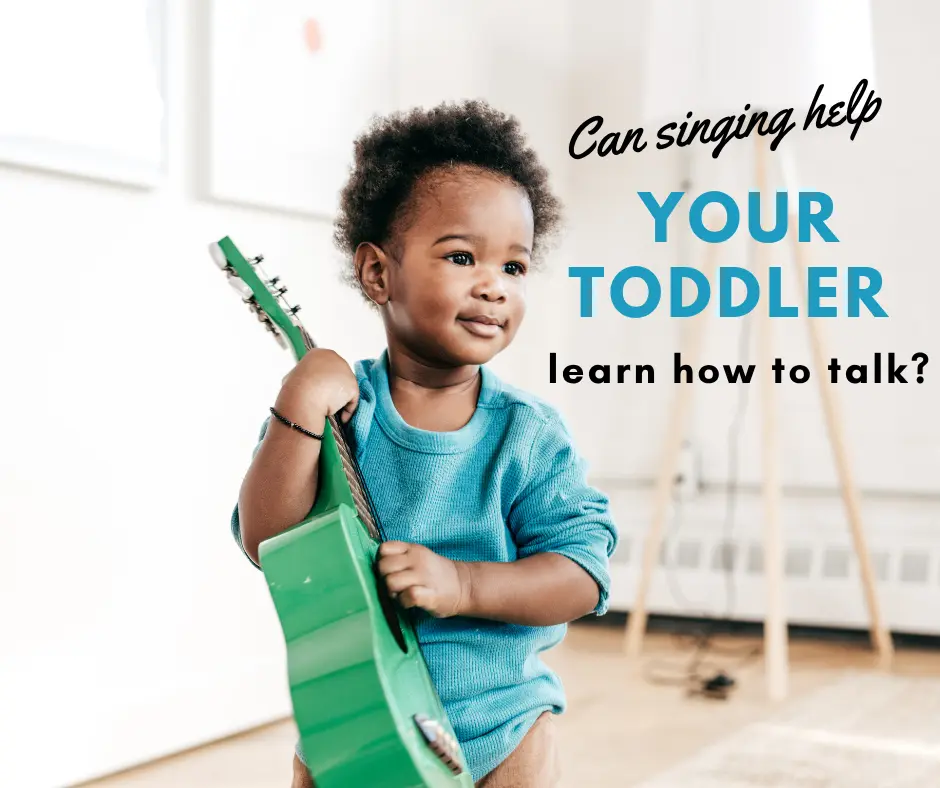
Can Singing Help Your Toddler Learn how to Talk?
Quick answer
Can singing help toddlers learn how to talk?
Absolutely! Singing can support early language development in toddlers by helping them hear patterns in speech, learn new vocabulary, improve memory, and practice sounds in a fun way. Songs inherently encourage repetition, listening, rhythm, and imitation, all of which are important building blocks for speech and communication.
Introduction
Many parents notice something amazing about toddlers:
Sometimes children will sing words before they can comfortably say them in conversation. A toddler who rarely speaks in full sentences may suddenly sing part of a favorite song perfectly from memory. Another child may begin filling in words during songs long before they consistently use those same words in everyday speech. This happens because music and language are deeply connected.
For young children, singing can be a playful and low-stakes way to practice listening, imitation, rhythm, memory, and speech. Songs slow language down, repeat important sounds, and make communication feel fun instead of stressful. Please note, singing is not a replacement for professional support if a child has significant speech or developmental concerns. But for many children, music can be a great tool that supports communication and encourages language growth in everyday life.
In this article, we’ll explore how singing can help toddlers develop speech and language skills, what that process looks like in real life, and simple ways parents can use music at home.
Why Music and Language Are Closely Connected
Music and speech share many of the same foundational skills.
Both involve:
• listening carefully
• recognizing patterns
• remembering sequences
• using rhythm and timing
• imitating sounds
When toddlers hear songs repeatedly, they begin learning:
• how words sound
• how language flows
• where sounds repeat
• how phrases are organized
Songs naturally exaggerate rhythm, pitch, and pronunciation, which makes language easier for young children to process and remember. For example: A simple song like “Twinkle, Twinkle, Little Star” repeats words and melodic patterns multiple times. This repetition helps toddlers anticipate sounds and practice language in a predictable way.
How Singing Supports Speech Development
Singing helps toddlers practice important communication skills in a way that is fun.
Here are some of the ways singing may support language development:
1. Songs encourage repetition
Toddlers learn through repetition.
Songs repeat:
• words
• phrases
• sounds
• rhythms
For example:
A toddler hearing “Old MacDonald Had a Farm” repeatedly begins anticipating words like:
• cow
• pig
• moo
• oink
That repetition strengthens vocabulary and memory naturally!
2. Singing slows language down
Everyday speech moves quickly. Songs often slow language into smaller, easier-to-hear pieces.
For example:
Instead of hearing a fast sentence, toddlers hear:
“Ba-ba black sheep have you any wool?”
This slower pacing can make sounds and words easier to process and imitate.
3. Music encourages imitation
Toddlers learn language largely through copying. They are naturally like little parrots!
Songs naturally invite children to:
• imitate sounds
• fill in missing words
• repeat phrases
• copy movements
For example:
You might pause during a familiar song and your toddler fills in:
“…star!” These playful moments build communication confidence.
4. Singing makes language feel fun
One reason music is so powerful for toddlers is that it removes pressure.
Children are often more willing to:
• experiment with sounds
• attempt new words
• participate socially
Children are really open to music and singing so it’s a great way to make them feel safe while learning something new.
What Singing and Language Growth Can Look Like
Every child develops differently, but many parents notice speech-related milestones during musical activities.
For example, a toddler may:
• hum before using full words
• repeat the last word of a song
• copy animal sounds during music time
• sing parts of familiar songs independently
• use gestures and movement along with singing
These are all important forms of early communication. For some children, singing can become a bridge between listening and speaking.
Easy Ways to Use Singing at Home
You do not need to be a professional singer or musician to use music with your toddler. Simple, consistent musical interaction can make a big difference.
Here are a few easy ways to incorporate singing into daily life:
1. Sing during routines
Toddlers love predictability.
Try singing during:
• bath time
• clean-up time
• diaper changes
• getting dressed
For example:
A simple clean-up song can help toddlers connect words with actions.
2. Repeat favorite songs often
Young children benefit from hearing the same songs repeatedly. Even if adults get tired of repetition, toddlers are learning through it.
3. Pause and let your child fill in words
This is a simple but powerful strategy.
For example:
“Twinkle, twinkle little…”
Pause and let your toddler attempt:
“…star!”
Even partial participation matters and makes a difference!
4. Add movement to songs
Movement helps reinforce language and engagement.
Try:
• clapping
• stomping
• pointing
• hand motions
Songs with actions are especially effective for young learners because it strengthens the mind and body connection.
5. Use simple, repetitive songs
Toddlers respond best to songs with:
• clear rhythms
• repeated words
• predictable patterns
Examples include:
• “Itsy Bitsy Spider”
• “Wheels on the Bus”
• “Row, Row, Row Your Boat”
Why Musical Play Matters for Toddlers
For toddlers, music is not just entertainment but an important developmental experience.
Musical play supports:
• listening skills
• social connection
• memory
• coordination
• emotional expression
• communication
And perhaps most importantly, music creates opportunities for joyful interaction between parent and child. Those shared moments matter deeply in early childhood development.
How Music Programs Can Support Early Learning
Many families find that structured music activities help toddlers stay engaged and build confidence.
Programs designed for young children like My Music Workshop introduce music through:
• singing
• rhythm games
• movement
• repetition
• beginner-friendly musical exploration
Because lessons are playful and age-appropriate, children can participate naturally while building foundational listening and communication skills.
Frequently Asked Questions
Can singing help speech-delayed toddlers?
Singing may support communication and language development, but children with speech concerns should also be evaluated by a qualified professional when appropriate.
Why do toddlers sing before they talk?
Songs use repetition, rhythm, and predictable patterns, which can make language easier for toddlers to remember and reproduce.
What songs are best for toddler language development?
Simple, repetitive songs with clear rhythms and repeated vocabulary are often most effective.
Do parents need musical experience?
Not at all. Simple singing, repetition, and playful interaction are what matter most.
Conclusion
Singing can be a powerful and joyful tool for supporting toddler language development. Through repetition, rhythm, imitation, and play, songs help children practice important communication skills in a way that feels natural to them. And while every child develops differently, music often creates meaningful opportunities for connection, confidence, and learning along the way.
Sometimes the path toward language starts with figuring out your child’s favorite song.
Ready to Explore Music Together?
If you’re looking for playful, beginner-friendly music experiences for your child, My Music Workshop offers engaging lessons designed specifically for young learners.
Families can explore:
• singing
• rhythm activities
• beginner music skills
• playful musical learning at home
You can try the program free for 7 days and discover how music can support learning, creativity, and connection for your child.
About the Author
Carole Crocco is a music educator with My Music Workshop who has extensive experience teaching young children and helping families introduce music in fun and developmentally appropriate ways. She is also a classically trained soprano and a singer-songwriter.
Ready to start lessons at home?
Step-by-step video lessons for kids 4 to 12 with Mr. Elias, with play-alongs and picture quizzes. Each lesson takes about 10 to 15 minutes. From $10 a month.


